MagazinePanda.com: A Complete Guide to the Digital Magazine
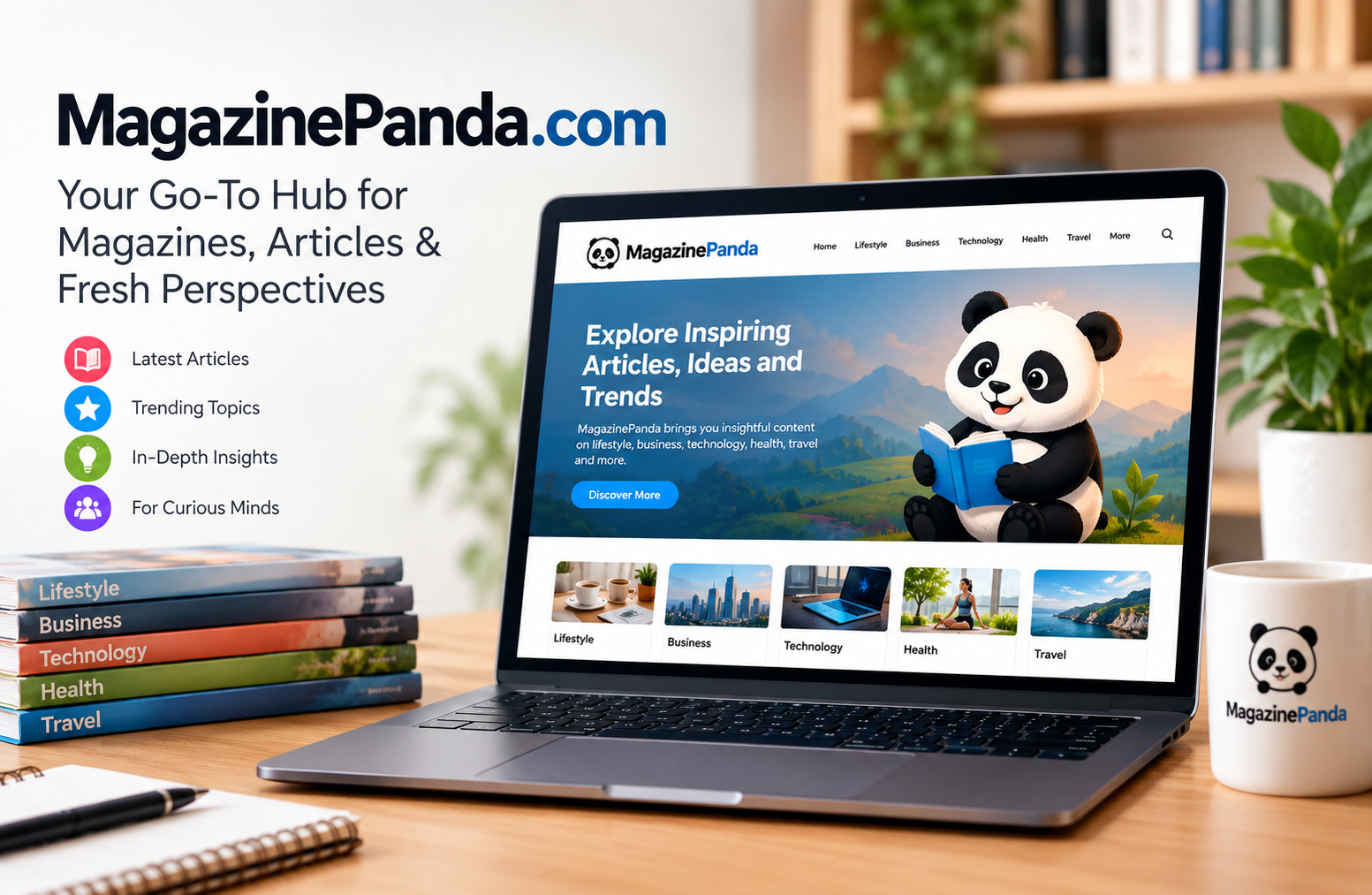
The keyword magazinepanda.com refers to a website associated with digital publishing and online magazine content. For readers discovering the platform, it is useful to understand its purpose, content categories, potential benefits, and limitations before relying on its articles. The website’s current indexed presentation describes a broad publication covering news, technology, business, entertainment, lifestyle, gaming, and digital culture.
Magazinepanda.com
+1
However, different third-party pages have described the domain in different ways. Understanding those differences helps readers evaluate the website more carefully and decide whether its content meets their needs.
Online magazines have become an important part of modern information sharing. They allow people to explore current developments, learn about unfamiliar subjects, and discover ideas without waiting for a printed issue. Yet convenience alone does not guarantee quality. Readers still need clear explanations, accurate information, credible references, and transparent publishing practices. Examining MagazinePanda through these principles provides a practical way to understand its place in the wider digital publishing environment.
What Is magazinepanda.com?
MagazinePanda can be understood as an online publication that brings multiple subject areas together under a single digital platform. Instead of concentrating exclusively on one industry, its current indexed content presents a general-interest approach. This structure allows readers to explore different subjects without visiting a separate website for every topic.
The platform’s published description emphasizes accessible information, interesting stories, and useful context. Its stated editorial interests include technology, artificial intelligence, business, entertainment, gaming, lifestyle, and current events.
Magazinepanda.com
+1
For example, someone interested in technology might explore an article about artificial intelligence. Another reader might prefer business developments, entertainment news, or lifestyle topics. A publication covering these different interests can appeal to people who enjoy exploring several subjects.
However, it is important to distinguish the website’s stated purpose from independently verified performance. A site’s description explains what it aims to provide, but it does not automatically prove that every article is accurate, original, or comprehensive.
Readers should therefore evaluate individual articles based on their evidence, relevance, authorship, and publication dates.
Understanding the Digital Magazine Model
A digital magazine publishes content through a website rather than relying primarily on printed editions. Articles can be organized into categories, updated when information changes, and accessed through search engines or direct links.
This model offers several practical advantages:
- Convenience: Readers can access articles from a computer, tablet, or smartphone.
- Variety: Multiple categories can serve readers with different interests.
- Discoverability: Search engines can help people find articles about specific questions.
- Flexibility: Publishers can correct or update digital content without printing a new edition.
- Accessibility: Well-written articles can explain complicated subjects in language that general readers understand.
These benefits depend on how a publication manages its content. A website with confusing navigation or poorly researched articles may not provide a good reading experience, regardless of its format.
Is It a News Website, Blog, or Online Magazine?
The distinction depends on the publication’s content and editorial approach.
A traditional news website usually emphasizes current events, reporting, and timely updates. A blog often focuses on individual articles, opinions, tutorials, or specialist knowledge. An online magazine can combine several formats, including news reports, explainers, features, reviews, and practical guides.
MagazinePanda’s current indexed presentation fits the broad digital magazine model because it includes several subject categories rather than concentrating on one narrow topic.
News, Trends & Stories Worth Reading
+1
Nevertheless, a broad subject range does not establish that the website operates like a traditional newsroom. Readers should examine its individual articles, editorial information, and sourcing before making assumptions about its reporting standards.
Main Content Categories on MagazinePanda
The usefulness of a multi-topic publication depends on the subjects it covers and the depth of its articles. A wide selection gives readers more opportunities to discover relevant information, but each category requires its own approach to research and verification.
News and Current Events
News helps readers understand developments that may affect their communities, workplaces, and daily decisions. Useful reporting should explain what happened, when it happened, who is involved, and why the development matters.
MagazinePanda’s current indexed presentation includes news and U.S. current events among its subject areas.
News, Trends & Stories Worth Reading
+1
When reading news online, consider the following questions:
- Does the article identify the date of the event?
- Does it distinguish confirmed facts from allegations or speculation?
- Does it provide evidence or refer to credible reporting?
- Does it explain the background needed to understand the story?
- Has the information changed since the article was published?
These questions are particularly important when a story is developing. Early reports can contain incomplete details, and later information may change the initial understanding of an event.
A useful news article should help readers understand the available evidence rather than simply encourage them to react to a headline.
Technology and Artificial Intelligence
Technology is one of the most rapidly changing areas of online publishing. New applications, software updates, artificial intelligence systems, cybersecurity threats, and consumer devices regularly introduce unfamiliar terms and decisions.
A technology section can help readers understand these developments without requiring advanced technical knowledge.
For example, an informative article about artificial intelligence should explain what a tool does, how people might use it, where it can fail, and what privacy concerns deserve attention. A guide about cybersecurity should provide practical steps rather than relying on frightening headlines.
Readers exploring technology content should look for:
- Clear explanations of technical terms.
- Current information about software features and compatibility.
- Practical examples that demonstrate how a tool works.
- Honest discussion of limitations and potential risks.
- References to official documentation when instructions depend on a particular product.
Technology articles can become outdated quickly. A guide written before a major software update may contain instructions that no longer match the current interface.
For this reason, publication and update dates are important. Readers should also check official product documentation before following instructions that involve account security, sensitive data, or system settings.
Business and Entrepreneurship
Business content can help readers understand companies, marketing methods, workplace changes, entrepreneurship, and economic developments. This information can be useful for students, employees, small business owners, and people researching a new commercial opportunity.
A strong business article does more than repeat a company’s announcement. It explains the implications, identifies the people affected, and distinguishes measurable results from promotional claims.
Consider an article about a new marketing strategy. Useful coverage would explain the strategy, the conditions in which it may work, the resources required, and the metrics a business should monitor. It would also discuss possible drawbacks, such as additional costs or difficulty measuring results.
Readers should be cautious when an article makes financial promises. Claims about guaranteed profits, unusually high returns, or effortless business growth require strong evidence and independent verification.
General business articles can provide useful background, but they should not replace professional advice when a decision involves substantial financial or legal consequences.
Entertainment and Popular Culture
Entertainment content helps readers follow films, television, streaming platforms, music, celebrities, gaming, and wider cultural trends.
This category serves a different purpose from financial or technical reporting. Readers may be looking for release information, background on a public figure, an explanation of a cultural trend, or a discussion of why a particular story has attracted attention.
Accuracy still matters. An entertainment article should distinguish confirmed announcements from rumors, particularly when discussing upcoming releases, casting decisions, or celebrity news.
A useful article might explain where a title is officially available, identify the relevant release date and region, or describe how a trend developed. If the information changes, the article should make the current position clear.
Entertainment writing can be engaging without exaggerating claims or presenting speculation as fact.
Lifestyle and Everyday Interests
Lifestyle content covers subjects connected to everyday choices, personal interests, travel, food, fashion, wellness, and modern living.
The best lifestyle articles help readers answer practical questions. A travel guide, for instance, should explain relevant costs, transportation options, seasonal considerations, and limitations. A product-related guide should clarify who might benefit from a particular option and who may need an alternative.
General advice should also recognize that people have different circumstances. A recommendation that works for one person may not be suitable for everyone.
When an article addresses health, safety, or other high-impact topics, readers should look for qualified sources and evidence appropriate to the subject. Broad lifestyle coverage should not be treated as a substitute for professional medical or other specialist guidance.
Gaming and Digital Culture
Gaming has developed into a broad industry involving entertainment, hardware, software, online communities, esports, streaming, and digital marketplaces.
Articles in this category may help readers understand game updates, industry developments, gaming technology, and emerging online trends.
Practical gaming guides should identify the game version, platform, and relevant settings. Instructions for a console may not work on a PC, while a mobile game update may change menus or performance requirements.
Readers should also be careful with unofficial downloads, account-sharing offers, suspicious giveaways, and websites requesting login details. A gaming article should help readers understand a topic without directing them toward unnecessary security risks.
Digital culture extends beyond games. It includes online communities, social platforms, creators, internet trends, and the changing ways people communicate and consume media.
Key Benefits of Using MagazinePanda
A multi-topic publication can be useful when readers want to explore different interests in one place. However, its value depends on whether the content meets their needs.
1. A Variety of Topics in One Place
One of the main advantages of a broad digital magazine is the ability to move between subjects without repeatedly starting a new search.
A reader might explore a technology explainer, read about a business development, and then discover an entertainment story. This variety can make casual browsing more interesting and help readers identify topics they want to investigate further.
It can also support early-stage research. Someone exploring an unfamiliar industry may use general articles to learn basic terminology before consulting specialist publications.
The important distinction is that variety supports discovery, but it does not guarantee specialist depth.
2. Convenient Access to Information
Online articles can be accessed whenever an internet connection and compatible device are available. Readers do not need to wait for a printed publication or visit a physical library to read general-interest content.
Search engines can also lead readers directly to a relevant article. This makes digital publishing useful for people looking for answers to specific questions rather than reading an entire issue from beginning to end.
Convenience is most valuable when the website is easy to navigate, its pages work properly on mobile devices, and its content is organized clearly.
3. Opportunities to Discover New Subjects
A publication covering different categories can introduce readers to subjects they might not have searched for independently.
Someone reading about artificial intelligence may become interested in its business applications. A reader exploring gaming might discover developments in hardware or online security.
This kind of discovery can encourage broader learning. However, readers should treat an introductory article as a starting point when a topic requires technical expertise or deeper research.
4. Accessible Explanations
Complex information is more useful when readers can understand it without unnecessary jargon.
A well-written article defines unfamiliar terms, uses relevant examples, and separates essential information from secondary details. It also explains limitations instead of implying that every method works in every situation.
This is especially valuable for technology, business, and current affairs, where headlines can leave important questions unanswered.
The quality of the explanation matters more than the number of words. A long article should provide additional evidence, context, or practical guidance rather than repeating the same point in different language.
5. Flexible Reading Across Devices
Digital publications can serve people who read at different times and in different environments.
A reader may open an article on a desktop during work, continue reading on a phone while travelling, or save a page for later reference. Responsive layouts, readable fonts, and clear headings make this experience more comfortable.
Readers should still consider accessibility. Descriptive headings, useful link text, readable contrast, and properly formatted lists help people navigate information more effectively.
How to Evaluate the Credibility of MagazinePanda
A website’s name, design, or publishing frequency cannot establish whether its content is trustworthy. Credibility should be assessed by examining the available evidence.
The current indexed material provides a general description of MagazinePanda, but that alone is insufficient to verify every article’s accuracy or the publication’s editorial performance. Readers should apply the same standards they would use for any online source.
Examine the Author and Publisher Information
Start by checking whether the article identifies its author and whether the website provides meaningful information about its editorial process.
Useful details may include an author’s relevant experience, editorial responsibilities, contact information, corrections policy, and information about how articles are researched.
An author biography is not proof of expertise by itself. Look for details that can be verified and that relate directly to the subject being discussed.
If an article discusses cybersecurity, for example, relevant technical experience is more useful than a biography that provides no information about the author’s qualifications or background.
If the author is not identified, consider whether the article provides strong supporting evidence and whether another reliable source confirms its claims.
Check the Sources Behind Important Claims
An article should provide evidence for claims that materially affect the reader’s understanding.
For example, statistics should ideally identify their original source, date, and relevant context. Scientific claims should refer to suitable research or recognized expert guidance. Claims about a company’s product should be checked against official documentation when possible.
Look for the difference between a primary source and a secondary explanation.
A primary source may be an official announcement, a government report, original research, or product documentation. A secondary source interprets or summarizes information from other sources.
Both can be useful, but important claims deserve closer examination.
If an article cites no evidence for a surprising claim, search for independent confirmation before accepting it.
Check Publication and Update Dates
The age of an article matters differently depending on the topic.
A historical explanation may remain useful for years. A guide about software settings, current prices, government rules, or breaking news may become outdated much sooner.
Before acting on information, ask:
- When was the article first published?
- Has it been updated recently?
- Does the update date refer to a meaningful revision?
- Do its links still work?
- Do current official sources support its main claims?
A recent date does not automatically make an article accurate. Equally, an older article may still be useful if its subject has not changed.
The purpose of checking dates is to understand whether the information remains applicable.
Compare Important Information With Independent Sources
No single website should be treated as the final authority on every subject.
If an article makes a significant claim, compare it with a relevant primary source or an established specialist publication. Look for agreement on the main facts and investigate meaningful differences.
This is especially important for health, financial, legal, and security-related subjects.
Independent confirmation helps identify outdated information, misunderstandings, and unsupported conclusions. It also makes it easier to separate a writer’s opinion from established facts.
Recognize the Difference Between Trust and Appearance
Professional design can improve readability, but it does not establish editorial quality.
Likewise, a large number of articles does not prove that a website conducts careful research. Publishing frequently can be useful, but only when the content remains accurate, relevant, and sufficiently detailed.
Readers should focus on observable evidence, including transparent sourcing, clear authorship, corrections, current information, and consistency with reliable references.
This approach is more dependable than judging a website solely by its appearance or popularity.
Is MagazinePanda Safe and Reliable to Read?
Safety and reliability are related, but they are not the same thing.
A website may load correctly and still publish inaccurate information. Likewise, an article may contain useful information even when the publication’s editorial practices are not fully documented. Readers should assess website security and content credibility separately.
Website Safety
Before downloading a file, creating an account, or submitting personal information, check whether the requested action is necessary and whether the website appears trustworthy.
Practical precautions include:
- Check that the website address is spelled correctly.
- Be cautious of unexpected redirects and aggressive pop-ups.
- Avoid downloading unknown files simply to read an article.
- Do not provide passwords, banking details, or verification codes in response to suspicious requests.
- Review privacy information before submitting personal data.
- Keep your browser and security software updated.
A secure connection can protect information during transmission, but it does not prove that a publisher’s claims are accurate or that every download is safe.
It is also important to avoid assuming that a website is dangerous merely because its ownership or editorial information is difficult to verify. The sensible approach is to assess the available evidence and avoid unnecessary risks.
Content Reliability
Reliability depends on the quality of the information itself.
An article is more convincing when it explains how its conclusions were reached, cites relevant evidence, and acknowledges uncertainty where appropriate. Readers should be more cautious when a page contains exaggerated promises, unsupported statistics, or claims that cannot be independently confirmed.
For developing news, check whether newer information changes the original story. For technical instructions, confirm that the steps match the current product version. For professional advice, consult a qualified source.
These habits help readers benefit from online content without treating every published statement as established fact.
Can You Trust Every Article on the Website?
No publication should be assumed to be correct on every subject.
Different articles may have different authors, evidence, levels of detail, and review processes. A useful introductory article does not necessarily demonstrate specialist expertise, while an article with a confident tone may still contain mistakes.
Evaluate each article according to its subject and potential consequences.
For casual reading, a general overview may provide a helpful introduction. For decisions involving money, health, law, privacy, or safety, seek confirmation from appropriate primary or specialist sources.
MagazinePanda for Writers and Content Publishers
Online magazines are also relevant to writers, bloggers, marketers, and businesses that want to reach readers through published content.
However, the fact that a website publishes articles does not automatically mean it accepts guest contributions, sells sponsored placements, or offers commercially valuable backlinks.
Anyone considering a publishing arrangement should verify the current terms directly with the website.
What Is Guest Posting?
Guest posting is the practice of contributing an article to a publication other than the writer’s own website. It can help a writer reach a new audience, demonstrate subject knowledge, and build professional relationships.
For businesses, a relevant guest article may introduce useful information to readers who have an interest in a particular product, service, or industry.
A good guest contribution should stand on its own. It should answer a genuine question, provide useful examples, and offer information that readers cannot easily obtain from a generic promotional paragraph.
For example, a cybersecurity company might contribute a practical guide to recognizing phishing attempts. A travel business might provide a detailed explanation of planning a trip during a particular season.
The value comes from the article’s relevance and usefulness, not merely from the existence of a published link.
Does MagazinePanda Accept Guest Posts?
The publicly indexed descriptions reviewed for this article establish that the website presents itself as a digital publication. They do not independently establish its current guest-post acceptance policy, editorial fees, or commercial publishing terms.
Therefore, writers should not assume that submissions are accepted or that a placement can be purchased.
Before contacting the publisher, look for a current contributor page, submission guidelines, or official contact information. If no clear policy is available, ask the publisher directly.
Useful questions include:
- Are unsolicited guest articles currently accepted?
- Which topics and writing formats are permitted?
- Are articles reviewed or edited before publication?
- Are sponsored articles accepted, and what are the applicable terms?
- Who retains ownership of the submitted content?
- Can published articles be updated or removed?
- Are links permitted, and what link attributes will be applied?
Written answers help establish expectations before a writer spends time preparing a submission or agrees to a commercial arrangement.
How to Assess a Guest-Posting Opportunity
A guest-posting opportunity should be evaluated according to its audience, editorial standards, subject relevance, and likely value.
Start by reading several recent articles. Check whether they are well written, whether the subject categories make sense, and whether the articles offer practical information rather than repeated promotional language.
Next, consider whether the publication’s readers are relevant to the business or topic you represent.
A website that publishes content across many industries may appear to offer broad exposure. However, a wide range of categories does not necessarily mean that every audience will be interested in your contribution.
The following checklist can help:
| Evaluation area | What to examine |
| Audience relevance | Does the readership match your intended audience? |
| Editorial quality | Are articles useful, original, and properly edited? |
| Topic fit | Does the proposed subject belong naturally on the site? |
| Publishing terms | Are fees, deadlines, and ownership terms clear? |
| Link policy | Are link attributes and placement conditions disclosed? |
| Long-term value | Is the article likely to help readers beyond its publication date? |
Do not judge a publishing opportunity on a single metric. A high number displayed by an SEO tool does not automatically demonstrate real readership, and a published article does not guarantee referral traffic.
Understanding Backlinks and Link Attributes
A backlink is a hyperlink from one website to another. Backlinks can help readers discover related resources, and search engines may use links as part of their systems for understanding the web.
However, not all links serve the same purpose.
A standard link may be followed by search engine crawlers, but that does not guarantee that a search engine will index the destination page or assign ranking value to the link.
The nofollow, sponsored, and ugc attributes communicate different information about links.
- Nofollow: Signals that the publisher does not want to imply the usual endorsement associated with a link.
- Sponsored: Identifies links connected with advertising, sponsorship, or other compensation.
- UGC: Identifies links within user-generated content, such as comments or forum posts.
Search engines may treat these attributes as signals rather than absolute rules. Their presence or absence does not guarantee a particular ranking outcome.
Paid placements deserve special care. Buying an article solely to manipulate search rankings can conflict with search engine spam policies. A legitimate sponsored article should provide reader value, disclose its commercial nature where appropriate, and use suitable link attributes.
For anyone evaluating a potential placement on MagazinePanda, the key is to verify the actual page and link rather than relying on a seller’s promise.
Does a Published Backlink Guarantee Indexing?
No. Publication and indexing are separate processes.
When an article is published, the page becomes available on the website. A search engine may discover it through links, sitemaps, or other crawling mechanisms. The search engine then determines whether and when to index the page.
A live URL does not prove that the page appears in search results. Similarly, a link that is technically followable does not guarantee that the destination will be indexed.
To assess a publishing opportunity, check the following separately:
- Confirm that the article’s URL loads correctly.
- Inspect the link in the published article.
- Verify that the destination URL is correct.
- Check the link’s HTML attributes.
- Investigate whether the published page is indexed, using available search tools.
- Recheck the page after publication if its status matters to your project.
Search operators and third-party SEO tools can provide clues, but neither should be treated as conclusive proof in every case. A website owner’s search console data can offer additional insight into crawling and indexing for pages they control.
This distinction matters because a publisher can deliver a live article without guaranteeing how a search engine will treat it.
How to Research MagazinePanda Before Making a Decision
Whether you are a reader, writer, or business owner, a short research process can help you determine whether the website suits your purpose.
Step 1: Visit the Correct Website
Start by confirming the domain carefully. Similar names and alternative spellings can lead to different websites with different owners, content, and policies.
The website reviewed here is referenced by the exact keyword magazinepanda.com. Search results also contain similarly named domains, so do not assume that their content or claims apply to the same property.
Check the address bar and make sure you are examining the intended website before relying on its information.
Step 2: Explore the Main Categories
Review the site’s navigation and identify the topics it actually publishes.
Look beyond category names. Open several articles and examine their content, publication dates, author details, and references.
This gives you a better understanding of the website’s practical focus than a short description alone.
Step 3: Read More Than One Article
A single page may not represent the publication’s overall quality.
Compare several articles from different categories. Look for consistent writing standards, useful explanations, clear sourcing, and meaningful distinctions between fact and opinion.
If the quality varies substantially, consider evaluating each article individually rather than making a broad assumption about the entire website.
Step 4: Check Important Claims Independently
When an article contains a statistic, recommendation, technical instruction, or significant factual claim, locate a reliable source that supports it.
Use official documentation for product features, government resources for relevant public information, and suitable research or professional sources for specialist subjects.
One relevant resource for evaluating online content is Google’s helpful, reliable, people-first content guidance. It explains principles that help publishers create content intended to serve readers rather than merely attract search traffic.
Step 5: Decide Whether the Website Meets Your Needs
Your final decision should depend on the purpose of your visit.
A reader looking for a general introduction may find a broad digital publication useful. Someone conducting specialist research may need more detailed technical sources. A business considering paid publication should examine editorial quality, audience relevance, link conditions, and the commercial agreement before proceeding.
There is no need to treat every website as either completely trustworthy or completely useless. A more effective approach is to identify what it does well, understand its limitations, and use other sources when necessary.
MagazinePanda and Search Engine Optimization
Search engine optimization, commonly called SEO, involves improving a website so that people can discover and use its content more effectively through search engines.
For a digital publication, sustainable SEO starts with understanding the audience. Publishers need to know what readers are searching for, what questions they need answered, and what information would make an article genuinely useful.
Why Content Quality Matters
A page should satisfy the reason someone searched for it.
For example, a reader searching for a software guide expects accurate instructions. Someone researching a business trend needs relevant context and reliable evidence. An article that repeats a keyword without answering the underlying question is unlikely to provide a good experience.
Useful content generally has several characteristics:
- It answers the main question early.
- It includes relevant details rather than unnecessary repetition.
- It uses headings that help readers find information.
- It supports important claims with suitable evidence.
- It acknowledges limitations and uncertainty.
- It is updated when important information changes.
These principles apply to MagazinePanda and other online publications alike. The goal should be to help readers accomplish something, not simply to produce a page containing a particular phrase.
The Role of Keywords
Keywords help publishers understand how people describe the information they need. They can also help writers maintain a clear focus when planning an article.
However, repeating an exact phrase excessively can make an article awkward and less useful.
A better approach is to use the primary keyword in natural, relevant locations, such as the introduction, a suitable heading, and the main discussion. Related terminology should appear when it helps explain the subject.
Writers should avoid adding the domain name to sentences where it contributes nothing to the meaning. Readers benefit more from precise explanations than from repeated branding.
Originality and Reader Value
Originality is not simply a matter of replacing words or rearranging sentences from another article.
An original article can provide a clearer explanation, compare alternatives, address overlooked questions, or demonstrate how a process works. It should also identify the limits of its evidence instead of inventing personal experiences or presenting assumptions as verified facts.
For a broad publication, maintaining consistent standards across categories is particularly important. A technology article, a business explainer, and a lifestyle guide may require different research methods, but all should be accurate and relevant to their intended readers.
Responsible Use of AI in Publishing
Artificial intelligence can assist with outlining, research organization, editing, and improving readability. However, generated text can contain incorrect details, outdated information, or unsupported claims.
Publishers should review AI-assisted work before publication. That review should include fact-checking, verifying sources, checking names and dates, and removing repetitive or misleading statements.
The responsible question is not simply whether a tool was used. It is whether the final article provides reliable, original, useful information and whether its publisher takes responsibility for its accuracy.
Common Challenges When Using a Multi-Topic Publication
A broad digital magazine can be convenient, but readers should understand several limitations.
Uneven Depth Across Categories
A publication covering many subjects may not provide the same depth in every area.
An introductory article can explain a concept effectively without covering every technical detail. However, readers researching a specialized subject may need peer-reviewed studies, official documentation, or an expert source.
The practical solution is to match the source to the task. Use general articles for orientation and specialist references when accuracy or technical depth is essential.
Information Can Become Outdated
Digital information changes at different speeds.
A general explanation of a historical event may remain relevant for years, while a guide to a software interface can become outdated after a single update.
Readers should check dates and verify information before acting on it. Publishers should also review important articles when products, policies, or circumstances change.
Limited Transparency Can Make Evaluation Difficult
Readers may find it harder to assess a publication when author biographies, editorial policies, corrections procedures, or sourcing details are unclear.
This does not automatically establish that an article is inaccurate. It does mean that readers have less information available for judging its reliability.
In such cases, independent verification becomes more important. Publishers can address the problem by making editorial responsibilities and contact details easier to find.
Broad Coverage Does Not Guarantee Expertise
A general-interest website can introduce many topics, but the presence of a category does not prove specialist competence.
Readers should look for evidence that an article’s research matches its subject. A basic entertainment explainer and a guide involving financial regulations should not be evaluated using identical standards.
The more consequential the decision, the more important it becomes to consult appropriate specialist sources.
Practical Tips for Getting More Value From MagazinePanda
The following habits can make browsing and research more productive.
- Begin with a clear question. Decide what you want to learn before opening an article.
- Read the introduction carefully. Check whether the page addresses your question directly.
- Use headings to navigate. Move to the sections most relevant to your needs.
- Check important dates. Confirm that the information is still current.
- Follow useful references. Consult original sources when an article makes important claims.
- Compare independent explanations. Investigate meaningful differences rather than accepting the first answer.
- Keep track of useful sources. Save relevant pages so you can revisit them during further research.
- Avoid unnecessary downloads. Prefer reading the article directly unless a file is genuinely needed.
- Separate facts from opinions. Recognize when an author is explaining evidence and when they are expressing a viewpoint.
- Use specialist sources when needed. A general article can be a starting point, not the final authority.
These habits make online reading more effective regardless of the publication being used.
Frequently Asked Questions
1. What is magazinepanda.com?
MagazinePanda is associated with a digital publication covering multiple subjects. Its current indexed presentation includes news, technology, business, entertainment, lifestyle, gaming, and digital culture. Readers should evaluate individual articles according to their accuracy and relevance.
2. What topics does MagazinePanda cover?
The website’s current indexed descriptions identify several broad categories, including current events, artificial intelligence, technology, business, entertainment, lifestyle, gaming, and culture. The available selection may change as the publication develops.
3. Is MagazinePanda a reliable source of information?
Reliability should be assessed article by article. Check authorship, publication dates, supporting references, and consistency with independent sources. For important health, legal, financial, or security decisions, consult appropriate specialist or primary sources.
4. Does MagazinePanda accept guest posts?
The available information reviewed for this article does not independently confirm its current guest-post policy. Check the website’s official submission information or contact the publisher directly before preparing an article or paying for publication.
5. Does a backlink from MagazinePanda guarantee Google rankings?
No. A backlink does not guarantee higher rankings, and a live article does not guarantee indexing. Search engines evaluate many signals, while paid links intended to manipulate rankings can conflict with search spam policies.
6. How can readers check whether a MagazinePanda article is up to date?
Check its publication and revision dates, follow its references, and compare important claims with current official or specialist sources. For rapidly changing subjects, verify the information before relying on it.
Conclusion
MagazinePanda represents the broad digital publishing model, bringing different subjects together in an online magazine-style environment. Its current indexed presentation includes news, technology, business, entertainment, lifestyle, gaming, and digital culture. This variety can help readers discover new subjects, explore general information, and move between interests in one place.
However, the usefulness of a digital publication depends on more than the number of categories it offers. Accuracy, relevant evidence, clear explanations, transparent authorship, and current information are essential when evaluating any online source. Readers should not assume that every article has the same level of depth or that a professional-looking website guarantees reliable reporting.
For writers and businesses, the same principle applies to publishing opportunities. Guest-post acceptance, editorial standards, commercial terms, and backlink conditions should be verified directly rather than assumed. A published link does not guarantee search engine indexing or improved rankings.
Ultimately, magazinepanda.com is best approached with a clear understanding of its stated publishing focus and a careful method for checking information. Use general articles to discover topics, verify important claims with suitable sources, and choose specialist references whenever the subject requires greater accuracy or expertise.