BlessingTide.com: Website Guide, Content, and Credibility
When people search for blessingtide.com, they may want to understand what the website offers, what types of articles they can find, and whether its content is useful for their needs. BlessingTide is an online publishing platform with roots in faith, prayer, blessings, and inspirational messages. Its content also extends into broader informational subjects, making it important to understand both its original purpose and its wider range of published material. Whether you are looking for spiritual encouragement, practical information, or a new website to explore, learning how the platform works can help you decide which resources are relevant to you.
What Is BlessingTide.com?
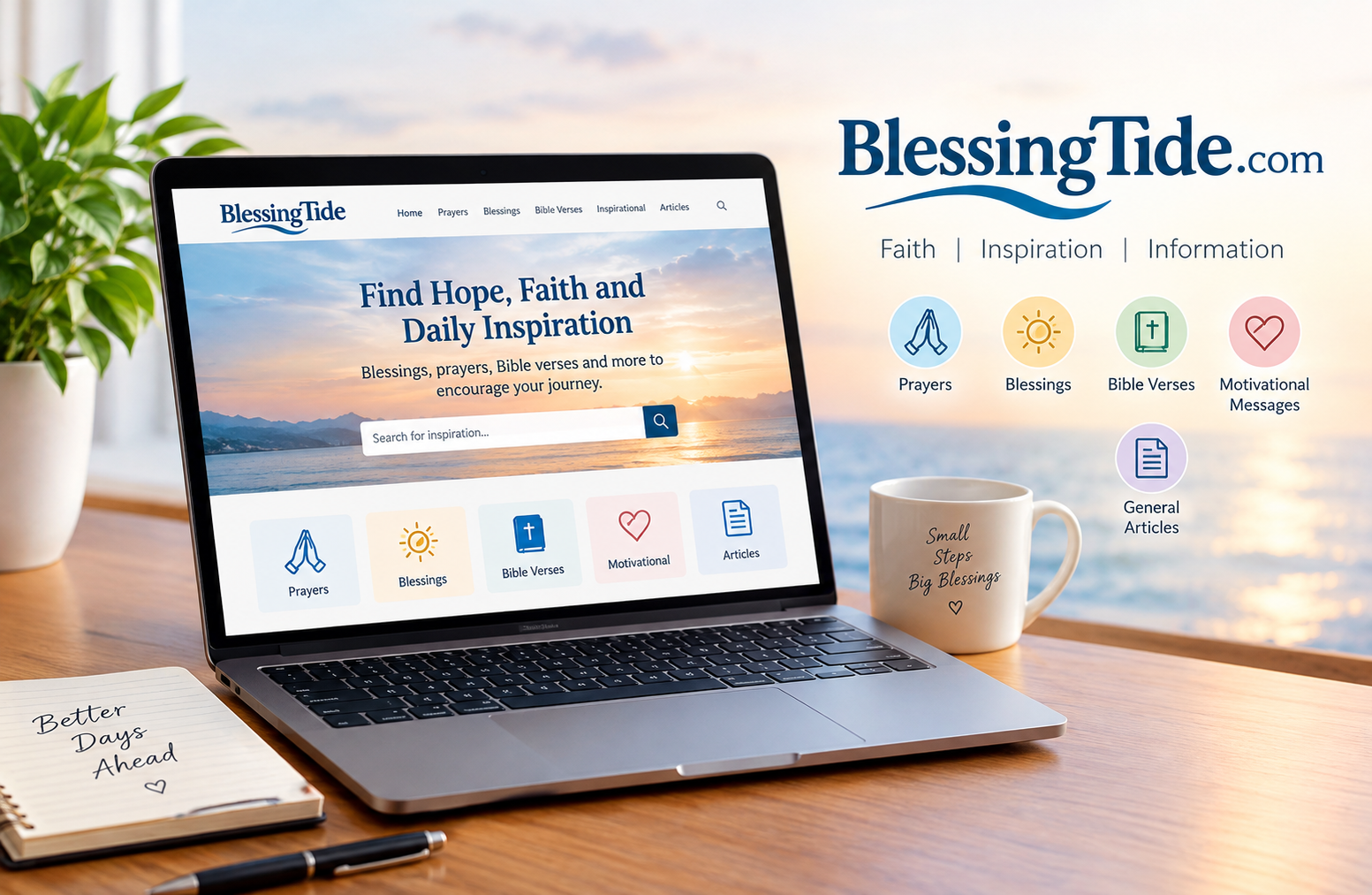
BlessingTide.com is an online content website that brings together inspirational material and general informational articles. Its original identity emphasizes faith, gratitude, prayer, Bible verses, and encouraging messages. These subjects are intended to provide readers with opportunities for reflection, reassurance, and a more positive outlook on everyday life.
The website’s stated mission focuses on sharing hope, strengthening belief through prayer, and making spiritual inspiration accessible to readers. Its About Us information describes a welcoming online space where visitors can explore blessings, Christian quotations, and messages intended to encourage kindness and gratitude.
However, understanding the website requires looking beyond its name. A site’s branding can suggest its original purpose without fully describing every subject it publishes today. BlessingTide has expanded beyond its initial faith-oriented identity into broader informational topics. Consequently, readers may encounter different types of content depending on the article, category, and subject they choose.
This distinction matters because visitors usually arrive with a specific question. Someone searching for a morning blessing may have very different expectations from someone researching a technology term or a practical lifestyle issue.
A useful way to approach the platform is to consider it an online publication with an inspirational foundation and a wider informational scope. Instead of assuming every article serves the same purpose, readers should evaluate each piece according to its subject, supporting information, and intended audience.
The Purpose and Background of BlessingTide
The name BlessingTide combines two ideas associated with encouragement and continuity. A blessing can represent gratitude, goodwill, spiritual comfort, or a sincere wish for someone’s well-being. A tide suggests something that moves in recurring waves.
Together, these words create a brand identity that naturally connects with positivity, reflection, and uplifting communication.
The website’s original emphasis reflects that interpretation. Its stated purpose includes sharing prayers, Bible verses, blessings for different occasions, and inspirational messages. Such material can help readers find appropriate words when expressing appreciation, offering comfort, or beginning a new day with a moment of reflection.
For example, a person who wants to send encouragement to a friend may not know how to express the right sentiment. An inspirational message can provide a starting point. Similarly, someone who follows a daily spiritual routine may appreciate having prayers and relevant passages available in one place.
These are practical uses rather than guarantees of a particular emotional or spiritual outcome. Different readers will respond to the same message in different ways, depending on their beliefs, circumstances, and personal preferences.
The website’s broader content also shows why its purpose should not be defined by its name alone. As online publications grow, their subject coverage can change. Readers benefit from understanding the current material rather than relying exclusively on a brand description.
What Content Can You Find on BlessingTide.com?
The content available on BlessingTide can be understood through several broad categories. These categories help explain why different people might visit the platform and how they can choose material that matches their interests.
1. Daily and Weekly Blessings
Blessings are a central part of the website’s original identity. They can provide short, positive messages for different days of the week, helping readers express hope, appreciation, and encouragement.
Daily blessings often focus on themes such as patience, gratitude, kindness, peace, and perseverance. Weekly collections can give readers a simple way to find a message that fits a particular day or situation.
For example, a Monday blessing may emphasize beginning the week with renewed motivation. A Friday message might focus on appreciation for the week’s experiences and the importance of making time for family or rest.
The usefulness of these messages depends on how readers apply them. A short blessing can serve as a personal reflection, a message to a friend, or a reminder to approach daily responsibilities with greater care.
Readers should also consider the context when sharing a blessing. A message that feels comforting to one person may not suit someone who prefers secular encouragement or follows a different faith tradition. Personalizing a message can make it more thoughtful and appropriate.
2. Prayers for Different Situations
Prayer-related content is another important part of the platform’s original focus. People may look for prayers when they need words for reflection, want to express gratitude, or are seeking spiritual encouragement during a difficult period.
Different situations may call for different forms of prayer. Some readers may prefer prayers about guidance and wisdom, while others may look for words connected with family, personal challenges, hope, or peace.
A well-written prayer can offer a structure for reflection when someone finds it difficult to express their thoughts. It can also provide language that readers adapt to their own circumstances and beliefs.
However, an online prayer should be treated as a resource rather than a replacement for personal judgment, community support, or professional assistance when those are needed. Spiritual content can be meaningful without being presented as a guaranteed solution to every problem.
When choosing a prayer, readers should consider whether its language reflects their beliefs and whether it addresses the situation they have in mind. A relevant message is generally more useful than a long passage that does not connect with the reader’s actual needs.
3. Bible Verses and Christian Inspiration
Bible verses and Christian quotations provide another way for readers to explore spiritual ideas. These materials may focus on love, forgiveness, courage, patience, humility, faith, or responsibility.
For many readers, a verse becomes more meaningful when it is considered within its original context rather than read as an isolated sentence. The surrounding passage, intended audience, and historical setting can influence how a passage is understood.
For this reason, readers who want to study a particular verse in depth should consult the relevant biblical passage and compare explanations from suitable religious or scholarly sources.
Short quotations can still be useful for reflection. A reader might select a passage as a personal reminder, discuss it with a family member, or use it as a starting point for a more detailed study.
The important distinction is between inspirational reading and detailed biblical interpretation. A short article can introduce a topic, but complex theological questions may require more context than a quotation alone can provide.
4. Motivational Messages and Positive Quotes
Motivational messages are designed to encourage reflection, persistence, kindness, and a constructive attitude toward everyday challenges.
Readers may use these messages when preparing a greeting, writing a personal note, or looking for a reminder during a demanding week. Short quotations can also help people express feelings that are difficult to put into words.
Nevertheless, positive messaging is most helpful when it recognizes real circumstances. Encouragement should not suggest that every problem can be solved through optimism alone or that people are responsible for every difficult event they experience.
A balanced motivational message can acknowledge uncertainty while encouraging practical action. For example, someone facing a challenging task may benefit from a reminder to take one manageable step rather than a promise that everything will work out perfectly.
This approach makes inspirational content more realistic and easier to apply to daily life.
5. General Informational Articles
The wider publishing scope of BlessingTide is important for visitors who arrive expecting only prayers and blessings.
The website also publishes general-interest material beyond its original inspirational focus. Depending on its current article collection, readers may encounter subjects such as technology, lifestyle, business, entertainment, and other informational topics.
These articles serve a different purpose from devotional content. Rather than offering spiritual reflection, an informational guide should explain a subject, answer a question, clarify terminology, or help readers understand a practical issue.
The standards for evaluating these two content types are therefore different. A blessing can be judged by its relevance, tone, and suitability for the intended audience. An article about technology or business needs a stronger focus on factual accuracy, clear explanations, and appropriate supporting evidence.
Readers should evaluate each article on its own merits instead of assuming that every subject has the same level of depth or reliability.
Who Can Benefit From Visiting BlessingTide.com?
The website may appeal to several groups of readers, depending on their interests and the type of material they are seeking.
Readers Looking for Spiritual Encouragement
People who enjoy Christian inspiration may find the website’s prayers, Bible verses, blessings, and uplifting messages relevant to their routines.
These resources can be used for private reflection, family conversations, or sharing thoughtful words with friends. Readers may also use them to identify a theme they want to explore more deeply through personal study or discussion with their faith community.
The key benefit is convenience. Instead of searching separately for different kinds of short inspirational material, visitors can explore related resources within one publishing platform.
People Who Want Messages for Friends and Family
Finding the right words for another person can be difficult, especially during important events or challenging periods.
A collection of blessings or encouraging messages can help people identify a suitable starting point for a greeting, note, or personal message.
For the best result, readers should adapt the wording to the relationship and situation. A message that includes a personal detail or sincere expression of care will often feel more meaningful than a generic quotation copied without context.
For example, a message for a friend starting a new job should ideally reflect that milestone. A note to someone experiencing a difficult period should prioritize empathy rather than offering unrealistic promises.
General Readers Seeking Introductory Information
Visitors interested in broader informational subjects may also find relevant articles on the website.
For these readers, the main benefit is the ability to discover explanations and introductory material across different topics. A clear article can help someone understand unfamiliar terminology, identify important questions, or determine what to research next.
However, introductory information is not always enough to support an important decision. Readers should look for reliable evidence, check the date of publication where relevant, and consult appropriate primary sources when the subject involves significant consequences.
Readers Who Prefer Simple, Accessible Writing
Online readers often want explanations that are straightforward and easy to follow.
Short paragraphs, descriptive headings, familiar language, and relevant examples can make information more accessible. These features are useful for people who are new to a topic or who want a quick overview before exploring more advanced material.
The value of accessible writing does not depend on a topic being simple. Even complicated subjects can be introduced clearly, provided the article explains essential terms and avoids presenting uncertain information as established fact.
How to Use BlessingTide.com Effectively
A good reading experience begins with a clear purpose. Rather than browsing without direction, visitors can use a few simple steps to find content that matches their needs.
Step 1: Identify What You Want to Find
Before opening an article, consider the question you want answered.
Are you looking for a blessing to share with someone? Do you want a prayer for personal reflection? Are you searching for an explanation of a general topic?
Defining your purpose helps narrow the available options. It also makes it easier to judge whether an article has answered your question.
For example, someone searching for a Sunday blessing may not need a long discussion about the history of religious quotations. Someone researching a technical subject, on the other hand, may need more detail than a short introductory paragraph provides.
Step 2: Choose a Relevant Article
Look for a title that clearly matches your intended subject. Read the introduction and headings to determine whether the article addresses the question you have in mind.
A relevant title is a useful starting point, but it does not guarantee that the full article contains the information you need.
Check whether the article explains its subject clearly, stays focused on the main question, and provides enough context for a reader who is unfamiliar with the topic.
If the article covers a subject different from what you expected, return to the main site and explore another relevant category.
Step 3: Evaluate the Information
For inspirational material, consider the wording, context, and suitability of the message.
For factual articles, use a more rigorous approach. Look for specific claims, supporting evidence, clear explanations, and references to appropriate sources when needed.
Ask yourself whether the article distinguishes established facts from opinions or interpretations. If it includes figures, dates, quotations, or claims about people and organizations, consider whether those details can be independently confirmed.
This step is particularly important when an article discusses health, finance, law, safety, or other subjects where incorrect information could have serious consequences.
Step 4: Check the Publication Date
Some subjects remain useful for years, while others change quickly.
A general reflection about gratitude may remain relevant long after publication. Information about a software product, a regulation, a market trend, or a current event may become outdated.
When a date is available, use it to assess whether the article is likely to reflect current circumstances. An older article is not automatically wrong, but time-sensitive claims deserve additional checking.
Readers should also distinguish between the date an article was first published and the date it was last meaningfully updated.
Step 5: Use the Content in the Right Context
Once you find a relevant article, decide how to apply it.
A blessing may be appropriate for personal reflection or a thoughtful message. A general informational article may help you understand a concept or prepare questions for a qualified professional.
Avoid treating every article as a complete answer to every situation. Some content is intended to introduce an idea, while other resources may provide more detailed guidance.
Using information within its proper limits helps readers gain value without relying on an article for claims it was not designed to support.
What Makes a Website Like BlessingTide Useful?
The usefulness of an online publication depends on more than its subject matter. Several characteristics influence whether readers can find, understand, and apply its content.
Clear Organization
A well-organized website makes it easier to move between related articles.
Descriptive category names, understandable navigation, and informative headings help visitors identify the right material without opening numerous unrelated pages.
Organization is especially valuable on a website that covers multiple subjects. Clear separation between inspirational content and general informational articles helps readers understand what to expect before they begin reading.
Readable Explanations
Content should communicate its main point without unnecessary complexity.
Readers benefit when an article defines unfamiliar terms, explains the purpose of its discussion, and uses examples to make abstract ideas easier to understand.
Readable writing should not remove important qualifications. The goal is to make information understandable while preserving the details necessary for an accurate explanation.
Relevance to the Reader’s Question
An article is more useful when it addresses the reason someone searched for it.
A visitor looking for a prayer should be able to find the prayer without working through unrelated material. A reader seeking a practical explanation should receive a direct answer before encountering background details that are less important to the immediate question.
This principle applies to every type of online publication. Content should be organized around the reader’s needs rather than padded with repetitive paragraphs.
Responsible Treatment of Facts
A website that publishes different kinds of information needs standards suited to each subject.
Inspirational content should represent quotations and religious references responsibly. Informational content should be careful with facts, sources, and statements that could influence important decisions.
A confident tone alone is not evidence of accuracy. Readers should be able to distinguish between a well-supported claim, an interpretation, and a general suggestion.
Transparency About Limitations
Trustworthy information does not pretend to answer questions beyond the available evidence.
If a subject is uncertain, changing, or dependent on individual circumstances, a useful explanation should acknowledge those limits.
This is particularly important when discussing complex matters. Clear qualifications help readers understand what an article establishes and what still requires additional research.
Is BlessingTide.com Trustworthy?
Trustworthiness should be assessed through observable evidence rather than the website’s name, branding, or tone alone.
BlessingTide’s official About Us page explains its stated purpose and the types of inspirational material it aims to provide. The website also has a Contact Us page, giving visitors a way to identify its stated contact channel.
These features help readers understand the publication’s identity and how to approach it. However, an About page and a contact option do not establish that every published claim is accurate or independently verified.
A fair assessment requires looking at the individual article.
Examine the Author and Editorial Information
Check whether the article identifies its author and whether the publication provides meaningful information about the writer’s qualifications or experience when the subject requires specialist knowledge.
An author biography can help readers understand the perspective behind an article. For technical or high-stakes subjects, relevant professional expertise may be especially important.
The absence of a detailed biography does not automatically make an article inaccurate. It does mean readers may have less information available when evaluating the author’s authority.
Look for Evidence Supporting Important Claims
Strong factual writing should explain why readers should accept its central claims.
Depending on the subject, useful evidence may include official documentation, research findings, original records, expert guidance, or direct statements from relevant organizations.
Readers should be cautious when an article makes broad promises without showing how those promises are supported.
For example, a general article about a health topic should not be treated as a medical diagnosis. Similarly, a financial explanation should not be mistaken for individualized investment advice simply because it uses confident language.
Distinguish Between Inspiration and Expertise
A thoughtful message can provide emotional or spiritual value without requiring the same evidence as a technical guide.
Conversely, a well-written informational article should not rely on inspirational language as a substitute for facts.
This distinction is especially relevant to a publication with both faith-based roots and broader informational coverage. Different articles need different standards of evaluation.
Verify High-Stakes Information Independently
When information may affect health, money, legal rights, or personal safety, confirm important details through an appropriate authoritative source.
For example, official government resources are often the best starting point for public regulations and government services. Qualified professionals may be necessary when a question depends on an individual’s circumstances.
This does not mean every general-interest article should be dismissed. It means readers should match the level of verification to the importance and complexity of the decision they are making.
Consider the Difference Between Accessibility and Authority
A website can be easy to access, simple to navigate, and pleasant to read without being the final authority on every subject it covers.
Accessibility concerns how easily a person can find and understand information. Authority concerns whether the information is supported by relevant knowledge, evidence, and experience.
Both matter, but they are not interchangeable.
The most balanced approach is to use a website for what its content can reasonably provide, then seek stronger evidence when the question requires greater certainty.
Challenges Readers Should Understand
Although a broad publishing platform can be convenient, it also presents several challenges that readers should recognize.
A Wide Range of Topics Can Mean Different Levels of Expertise
When a publication covers many subjects, it may be difficult to determine whether every article has received the same level of specialist review.
A writer who can explain a general concept clearly may not necessarily have the qualifications needed to provide authoritative guidance on a complex medical, legal, or technical issue.
Readers should therefore evaluate expertise at the article level instead of assuming that the entire website has uniform authority across every category.
Search Results May Not Show the Full Context
A person may discover a website through a search result that displays only a title, short excerpt, or selected phrase.
That limited preview may not reveal the article’s qualifications, intended audience, or complete explanation.
Reading the relevant sections helps establish whether the article actually answers the question and whether its statements have been presented fairly.
Inspirational Content Can Be Personal
Religious and motivational messages are not interpreted identically by everyone.
A phrase that feels encouraging to one reader may not reflect another person’s beliefs or circumstances. Readers should feel free to select material that fits their values and to adapt wording before sharing it.
The purpose of inspirational material is to provide a useful resource, not to impose a single emotional response.
Broad Articles May Need Further Research
Introductory content can be a useful starting point, but it may not provide enough detail for a complex question.
If an article introduces a subject without addressing its important exceptions, definitions, or practical limitations, further research may be necessary.
Readers can improve their understanding by writing down unanswered questions and consulting sources that specialize in the subject.
Similar Website Names Can Cause Confusion
When searching for an online publication, it is important to confirm the exact domain.
Similar names, alternative spellings, and different domain extensions can lead to unrelated websites. A reader should not assume that two similarly named platforms have the same ownership, editorial standards, or content.
Checking the address bar and the website’s own information can help avoid confusion.
Practical Ways to Get More Value From Online Articles
A thoughtful reading process can make online research more efficient, whether you are exploring BlessingTide or another publication.
Start With a Specific Question
Write down the question you want answered before beginning your search.
For example, instead of browsing broadly for inspirational content, you might look for a message appropriate for a family celebration or a prayer focused on gratitude.
For an informational topic, identify the precise concept or decision you need to understand. A specific question helps you judge whether an article is relevant.
Read Beyond the Headline
Headlines are designed to summarize a topic, but they cannot provide the complete explanation.
Review the introduction, section headings, and conclusion. Then return to any section that contains the information most relevant to your question.
This method reduces the risk of misunderstanding a claim that depends on details explained later in the article.
Separate Facts From Opinions
An article may include facts, recommendations, personal interpretations, and general observations.
These elements should not automatically receive the same level of confidence.
A factual statement should be supported by appropriate evidence when necessary. An opinion should be understood as a perspective. A recommendation should be evaluated according to the reader’s circumstances.
Recognizing these differences makes it easier to use information responsibly.
Compare Sources When the Subject Matters
For important questions, consult more than one suitable source.
Comparisons can reveal whether different sources agree on the essential facts, whether one explanation omits an important qualification, or whether a claim remains uncertain.
The goal is not to collect as many articles as possible. It is to identify reliable information that directly answers the question.
Save Only What You Will Reuse
If you find a prayer, blessing, or explanation that is genuinely useful, consider keeping a personal note or bookmark.
Organize saved material by purpose, such as personal reflection, messages for family, or research references. This makes it easier to find relevant information later without repeating the same search.
When saving factual material, include its source and publication date where practical. This is particularly helpful for subjects that change over time.
BlessingTide.com and the Importance of Responsible Online Publishing
Online publications influence how people discover, interpret, and share information. Their responsibility is therefore not limited to making content available. They should also aim to communicate clearly, distinguish facts from opinions, and respect the needs of their intended readers.
For a publication with both inspirational and general-interest content, this requires attention to the purpose of each article.
A prayer collection should use appropriate language and represent its religious context carefully. An informational guide should provide a direct explanation, avoid unsupported promises, and acknowledge uncertainty when the evidence does not support a definitive answer.
Good publishing practices also involve reviewing material when important facts change. An article about a time-sensitive subject may need updates, while an evergreen reflection may remain useful without frequent revisions.
Readers can contribute to a better information environment by evaluating claims thoughtfully and avoiding the spread of information they have not checked.
These habits are valuable beyond any single website. They help people make better use of the enormous amount of material available online.
How BlessingTide Fits Into Everyday Online Reading
The role of a website depends partly on what the visitor hopes to achieve.
For someone seeking spiritual encouragement, BlessingTide’s original focus may provide a convenient starting point for finding blessings, prayers, and positive messages. These materials can support reflection, help express goodwill, or provide words for a personal note.
For someone researching a general topic, the website’s wider informational material may offer an introduction to an unfamiliar subject.
In either case, the best experience comes from choosing content with a clear purpose. Readers should consider whether an article is relevant, whether it explains its subject adequately, and whether any important claims need independent confirmation.
It is also useful to recognize what a website cannot establish by itself. A publication’s presence online does not guarantee that every statement is current, complete, or appropriate for every situation.
A balanced reading approach allows visitors to appreciate useful material without overlooking the need for critical judgment.
The Future Value of a Broad Content Website
The long-term value of an online publication depends on whether it continues to meet readers’ needs.
A useful website should make its purpose understandable, organize information clearly, and provide material that answers genuine questions. It should also avoid confusing readers about the difference between introductory information and specialist advice.
As audiences change, the topics they search for may change as well. A publication can respond by expanding its coverage, but expansion is most effective when the quality and relevance of each article remain priorities.
For readers, this means evaluating new content with the same care used for established material. Familiar branding can make a website easier to recognize, but the actual article remains the most important unit of evaluation.
For publishers, the lesson is straightforward: broad coverage alone does not make a resource valuable. Readers benefit most when articles offer clear answers, appropriate context, accurate information, and a meaningful reason to exist.
BlessingTide’s combination of inspirational roots and wider informational subjects makes this distinction particularly relevant. The website can serve different reading interests, but visitors should choose each article according to its purpose and the level of reliability the subject requires.
Frequently Asked Questions About BlessingTide.com
1. What is BlessingTide.com?
BlessingTide.com is an online publishing website with roots in faith, prayers, blessings, Bible verses, and inspirational messages. It also publishes broader informational content across additional subjects.
2. What type of content can I find on BlessingTide.com?
Readers may find daily and weekly blessings, prayers, Christian quotations, motivational messages, and general-interest articles. The available subjects depend on the website’s current publishing activity.
3. Is BlessingTide.com only a religious website?
No. Although its original identity emphasizes faith and inspiration, the website’s content extends beyond religious material into broader informational topics.
4. Is BlessingTide.com a trustworthy source?
Trustworthiness depends on the individual article. Readers should examine its author information, evidence, publication date, and accuracy. Important medical, financial, legal, or safety-related claims should be checked against appropriate authoritative sources.
5. Can I use blessings from BlessingTide.com in personal messages?
Yes, readers can use suitable blessings and inspirational messages as starting points for personal reflection or communication. Adapting the wording to the recipient and occasion can make the message more relevant and sincere.
6. Does BlessingTide.com replace professional advice?
No. General informational articles are not a substitute for individualized professional advice when a matter involves health, legal rights, finances, or other significant decisions. Consult an appropriately qualified professional when necessary.
Conclusion
BlessingTide.com is an online publication with an inspirational foundation and a broader collection of informational material. Its original focus on prayers, blessings, Bible verses, and positive messages may appeal to readers seeking spiritual encouragement, while its wider content can introduce visitors to additional subjects.
The most useful way to approach the website is to identify your purpose, choose relevant articles, and evaluate the information according to its subject. Inspirational content can provide meaningful words for reflection and communication, while factual articles require attention to evidence, accuracy, and context.
A website’s name and presentation are useful starting points, but neither guarantees the quality of every article. By reading carefully, checking important claims, and recognizing when further research is needed, visitors can make more informed use of the material they find online.
Ultimately, the value of BlessingTide depends on how well its individual articles meet readers’ needs. A thoughtful approach helps distinguish useful encouragement from general information and introductory explanations from advice that requires specialist knowledge.