Zavalio Com: What It Is, What It Offers, and How to Use It
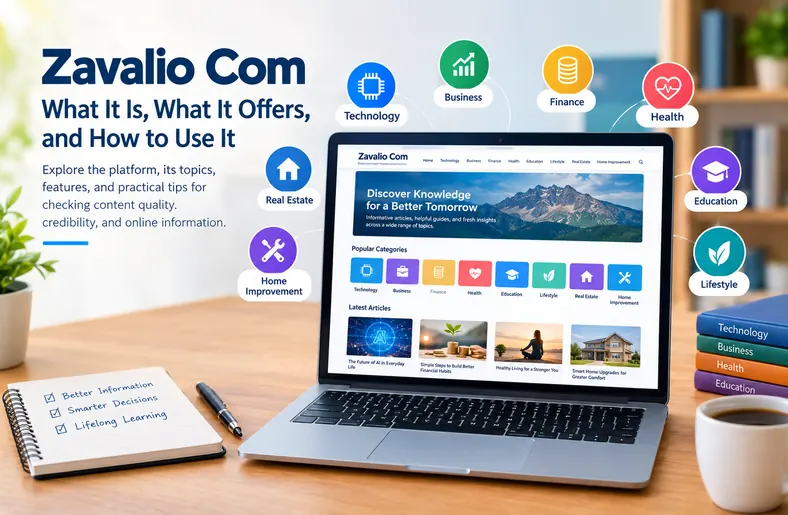
Zavalio com is a digital publishing website that presents articles, explainers, features, and informational guides across a variety of subjects, including technology, business, finance, health, education, lifestyle, real estate, and home improvement. For readers discovering the platform for the first time, understanding what Zavalio com offers, how its content is organized, and how to assess the reliability of its information can make the browsing experience more useful. Rather than focusing on a single industry, the website aims to serve a broad audience interested in learning about different subjects, following developments, and finding accessible explanations of everyday questions.
What Is Zavalio Com?
Zavalio com is an online media and publishing platform that produces informational and editorial content for a general readership. Its central purpose is to make a range of subjects accessible through articles that explain ideas, examine developments, and provide context around topics that affect modern life.
Unlike a specialist website devoted exclusively to technology, finance, or health, the platform covers several areas of interest. This broad approach allows readers to explore different subjects without limiting their visits to one particular category.
According to its official About page, the publication was established in 2023. It describes its work through several content formats, including articles, explainers, features, editorials, insights, and practical guides.
These formats serve different purposes. An explainer may introduce an unfamiliar concept, while a feature can examine a subject in greater depth. An editorial may present an identifiable viewpoint, whereas a practical guide can organize information around a specific question or task.
Understanding this distinction helps readers approach the website with realistic expectations. Not every article will provide the same type of information, and the most useful reading experience often begins with identifying what a particular piece is intended to accomplish.
Why Are People Searching for Zavalio Com?
People search for a website by name for several reasons. They may have encountered an article in search results, received a link from another person, or noticed the domain while researching a subject.
In these situations, the searcher usually wants more than a simple definition. They may want to understand the website’s purpose, determine whether it is relevant to their interests, or decide whether its published information deserves further consideration.
Several questions commonly arise when someone encounters an unfamiliar publishing platform.
Understanding the website’s purpose
A reader may initially be unsure whether a domain represents an online store, a software service, a news organization, or a general-interest publication.
The clearest starting point is the website itself. Its homepage, category navigation, About page, and published articles help establish what it offers.
Zavalio com presents itself as a digital publication rather than a conventional shopping platform. Its editorial focus is on producing written content across multiple subject areas.
Finding useful information
Another reason people visit a publishing website is to find explanations that are easier to understand than highly technical material.
A reader researching a new technology may need a basic introduction before exploring specialist documentation. Someone learning about a business concept may want definitions and examples before examining more advanced analysis.
A general-interest publication can help provide this initial context, provided the article is accurate, relevant, and sufficiently detailed.
Checking credibility before relying on an article
Readers should also consider whether the information is trustworthy. This is especially important when content concerns health, financial decisions, legal matters, or other subjects where inaccurate guidance could have serious consequences.
The existence of a professional-looking website does not automatically establish the accuracy of every article. Readers should examine individual sources, publication dates, author information, and the evidence supporting important claims.
This approach is more useful than making a broad judgment about an entire website based on its name or appearance.
What Topics Does Zavalio Com Cover?
One of the defining characteristics of Zavalio com is its broad editorial scope. Its published material covers several areas connected to contemporary life, work, consumer decisions, and personal interests.
The following sections explain what readers may look for within its principal subject areas.
Technology and digital developments
Technology content helps readers understand products, systems, and developments that influence how people communicate, work, learn, and manage information.
Articles in this area may explore software, artificial intelligence, digital platforms, emerging technologies, or changes in the wider technology industry.
For readers who do not work in technical fields, accessible explanations can make unfamiliar terms easier to understand. A useful technology article should explain not only what a tool or development is, but also why it matters and where its limitations may appear.
For example, an introductory article about artificial intelligence should distinguish between established capabilities and claims about future possibilities. It should also explain that results can depend on the system, the quality of the information supplied, and the task being performed.
Readers can benefit from this context when deciding whether a technology is relevant to their needs.
Business and entrepreneurship
Business content can help readers understand how organizations operate, respond to changing markets, and make decisions.
Topics may include business planning, workplace practices, management, entrepreneurship, customer relationships, and broader commercial developments.
For aspiring business owners, introductory articles can provide a useful starting point for understanding concepts such as market research, operating expenses, customer acquisition, and business planning.
However, a general article should not be confused with a complete business plan or individualized professional advice. The best way to apply business information is to consider the circumstances of the organization, its available resources, and the evidence behind the recommendation.
Readers should also distinguish between an opinion about business strategy and a claim supported by reliable research or documented results.
Finance and money-related subjects
Financial topics require particular care because readers may use the information to make decisions involving savings, borrowing, investments, or household budgets.
Educational finance content can explain basic concepts, clarify terminology, and help readers prepare questions before speaking with a qualified professional.
When reading financial material, pay attention to whether an article identifies its assumptions, explains potential risks, and distinguishes general education from personalized recommendations.
For instance, an explanation of investment risk should not imply that an asset will deliver a guaranteed return. Similarly, an article about borrowing should consider interest, fees, repayment periods, and the consequences of missed payments.
A reader should independently verify current rates, regulatory requirements, and product terms before acting on information that could affect their financial position.
Health and well-being
Health information can help people become familiar with common terminology, understand general wellness topics, and identify questions they may wish to discuss with a healthcare professional.
However, health articles vary widely in quality. Readers should be especially careful with claims about treatments, diagnoses, supplements, and medical outcomes.
A responsible approach involves checking whether an article identifies credible medical evidence, avoids exaggerated promises, and makes clear when professional assessment is necessary.
General information cannot account for every person’s medical history, symptoms, medications, or individual circumstances.
Readers should therefore treat broad health explanations as educational resources rather than substitutes for appropriate medical care.
Education and learning
Education-related content may help students, parents, teachers, and lifelong learners explore learning methods, academic concepts, career preparation, and developments in education.
A well-structured educational article defines unfamiliar terms, explains concepts in a logical order, and uses examples to make abstract ideas easier to understand.
Readers can also use introductory material to identify subjects that require further study. For example, an overview of a new academic field may help a student determine which textbooks, courses, or official resources to consult next.
The usefulness of educational content depends on its accuracy and level of detail. Readers preparing for examinations or professional qualifications should compare general explanations with the official syllabus and learning materials relevant to their course.
Lifestyle and everyday decisions
Lifestyle articles cover a wide range of practical subjects, personal interests, habits, and everyday choices.
Depending on the topic, readers may find information related to routines, organization, consumer decisions, personal interests, or changes in how people live and work.
The value of this content comes from its relevance to real situations. An effective article should offer clear explanations and realistic considerations rather than suggesting that one approach works equally well for everyone.
Readers should consider their own priorities, budget, circumstances, and preferences when applying general lifestyle advice.
Real estate and home improvement
Real estate and home improvement are useful subjects for readers researching property decisions, maintenance issues, renovations, and ways to manage their living spaces.
Articles in these areas can introduce common terminology, explain maintenance considerations, and outline questions to ask before beginning a project.
For example, a guide to home maintenance may help a homeowner recognize signs of a potential problem. However, identifying a possible issue is not the same as establishing its cause. Structural concerns, electrical hazards, plumbing failures, and other technical problems may require inspection by a qualified professional.
Likewise, property-related financial or legal decisions should be checked against current local regulations and the specific conditions of the transaction.
General information is most valuable when it helps readers recognize what they need to investigate next.
How to Navigate Zavalio Com Effectively
Browsing a multi-topic publication can become confusing when readers do not have a clear goal. A simple approach can make it easier to find relevant material and avoid spending time on unrelated articles.
Start with a specific question
Before opening several pages, identify what you want to learn.
For example, your question might be:
- What does a particular technology do?
- Which factors influence a business decision?
- What does an unfamiliar financial term mean?
- What should a homeowner know about a maintenance issue?
- Where can I find a clear introduction to an educational subject?
A focused question gives you a practical way to judge whether an article is relevant.
Explore the appropriate category
Use the website’s category navigation, where available, to narrow your search to the relevant subject.
This can be more efficient than browsing unrelated articles from the homepage. If the site organizes material into technology, finance, education, lifestyle, or other categories, begin with the section most closely related to your question.
Category labels are useful navigation tools, but they do not guarantee that every article within a section will answer your specific query.
Read beyond the headline
Headlines are designed to communicate a subject and encourage readers to open an article. They do not always reveal the full scope of the information inside.
Read the introduction and the main headings before deciding whether to continue.
Look for a clear explanation of the topic, relevant examples, supporting evidence, and a logical conclusion. If the article makes a strong claim, check whether the supporting discussion actually establishes it.
This simple habit can help you distinguish useful explanations from pages that provide little substance beyond a headline.
Check the publication date
The publication date matters because information does not remain equally reliable across every subject.
A basic explanation of a long-established concept may remain useful for years. Information about software features, financial regulations, medical recommendations, or market conditions may require more frequent review.
If an article contains time-sensitive claims, check whether it has been updated and whether the relevant information remains accurate.
An old publication date does not automatically make an article wrong, just as a recent date does not automatically make it reliable. The important question is whether its information is still valid.
Follow related topics selectively
A broad publication may contain several articles connected to a single subject.
Reading related material can help build a more complete understanding, but more pages do not necessarily mean better research.
Choose follow-up articles that address a specific gap in your knowledge. If you already understand the basics, move toward evidence, practical examples, or more specialized sources rather than repeatedly reading introductory summaries.
This makes the browsing process more purposeful.
How to Evaluate the Credibility of Zavalio Com Content
Understanding what a website publishes is only the first step. Readers must also decide whether a particular article is sufficiently reliable for the purpose at hand.
Credibility is best evaluated through observable evidence rather than assumptions based on branding or design.
Examine author information
Look for the author’s name, relevant qualifications, professional background, and experience with the subject.
An author does not necessarily need a formal qualification to explain every everyday topic. However, specialized subjects require an appropriate level of knowledge and careful use of evidence.
For medical, legal, and financial information, relevant professional expertise is especially important.
If an article offers no clear information about its author, consider whether the article provides enough evidence and transparency to support its claims.
Look for supporting sources
Reliable factual articles should make it possible to verify important claims.
Depending on the subject, useful supporting evidence may include government publications, academic research, official documentation, recognized professional organizations, or original data.
References are particularly important when an article provides statistics, describes a scientific finding, explains a regulation, or makes a claim that could influence a major decision.
A list of links alone is not enough. Readers should check whether the cited sources actually support the statements being made.
Distinguish facts from opinions
Articles sometimes combine established facts, interpretation, and recommendations. These are different types of information and should not be treated as interchangeable.
A factual statement should be supported by suitable evidence. An interpretation should explain how the evidence is being understood. An opinion should be recognizable as a viewpoint rather than presented as an indisputable fact.
For example, reporting that a technology has a particular feature is different from arguing that the technology is the best option for every business.
Recognizing this difference helps readers evaluate arguments fairly.
Check whether the article acknowledges limitations
Trustworthy explanations do not need to pretend that every question has a simple answer.
A useful article may explain that results vary by situation, evidence is incomplete, regulations differ between jurisdictions, or a recommendation depends on specific conditions.
These qualifications can make information more useful because they help readers understand where a general explanation ends and a more specific assessment begins.
Be cautious when an article promises guaranteed outcomes or presents a complex decision as completely risk-free.
Compare important claims with independent sources
When an article concerns a significant decision, verify its central claims using another reliable source.
For example, official government guidance can help confirm regulatory information. Original research can provide more context for scientific claims. Official product documentation can clarify whether a software feature is actually available.
The purpose is not to reject an article simply because it is unfamiliar. It is to establish whether the information is supported well enough for your needs.
For additional guidance, Google’s helpful, reliable, people-first content guidance explains the importance of creating useful content for people rather than producing pages primarily to manipulate search rankings.
Benefits of Using a Broad Digital Publication
A multi-topic publishing website can be useful when readers understand its strengths and limitations.
Access to different subject areas
A broad editorial scope allows readers to explore technology, business, education, lifestyle, and other subjects in one place.
This can be helpful when researching a question that crosses several fields. A small business owner, for example, may need to understand technology, marketing, budgeting, and workplace organization.
Related introductory articles can provide a starting point for exploring those connections.
Accessible explanations
Specialist resources often assume that readers already understand the terminology. General-interest articles can help bridge that gap by introducing concepts in simpler language.
This is particularly valuable for people who are new to a topic or need a quick overview before consulting a more technical source.
Clear writing should not remove important details. The goal is to explain complexity in an understandable way while preserving the meaning of the subject.
Flexible reading
Digital publishing allows readers to access articles when they need them, revisit useful explanations, and explore subjects at their own pace.
Unlike a fixed course or printed reference book, a website can publish new material and update existing pages as information changes.
The quality of this benefit depends on how well the content is maintained. Readers should still verify time-sensitive claims rather than assuming every page is current.
Opportunities for wider learning
Reading across different subject areas can help readers discover unfamiliar ideas and recognize connections between fields.
A person researching digital business tools may discover relevant concepts in finance or workplace management. Someone exploring home improvement may find related information about energy use or property maintenance.
These connections can make general reading more productive when readers use them to develop specific questions and pursue reliable evidence.
Challenges and Limitations to Consider
A broad publishing model also presents challenges. Understanding these limitations helps readers use a website more carefully.
Not every article will match every reader
A publication that covers many subjects cannot assume that every reader will find every article useful.
Someone researching a technical issue may need specialist documentation, while a reader looking for a general introduction may prefer a shorter explanation.
The best approach is to judge each article according to the question it needs to answer.
Content quality may vary by subject
A website’s coverage across multiple fields does not automatically mean that it has the same level of expertise in every area.
An article about an everyday topic may require a different standard of evidence from an article about medical treatment, tax obligations, or investment risk.
Readers should pay attention to the demands of the subject and seek more authoritative material whenever a decision requires specialized knowledge.
Information can become outdated
Online publishing is dynamic. New research, product changes, revised regulations, and changing circumstances can make older content incomplete.
This is especially relevant when an article includes prices, eligibility requirements, technical specifications, or current recommendations.
Look for update information and verify important details before acting.
Search visibility does not prove accuracy
A page may appear prominently in search results without being the best source for every question.
Search rankings can help users discover content, but ranking position alone is not proof of expertise or factual correctness.
Evaluate the evidence, transparency, and relevance of the article itself.
Broad advice may not fit individual circumstances
General articles are written for a wide audience. They cannot always account for local laws, personal finances, medical history, business conditions, or other factors that influence individual decisions.
Use general content to build understanding and prepare better questions. For decisions with significant consequences, consult the appropriate qualified professional.
Is Zavalio Com Useful for Research?
Zavalio com may be useful as a starting point for general research, particularly when a reader wants an accessible introduction to a subject or needs to understand unfamiliar terminology.
However, the usefulness of any individual article depends on its purpose, accuracy, depth, and supporting evidence.
A practical research process involves three stages.
First, use an introductory article to establish the basic concepts and identify the main questions.
Second, locate reliable primary or specialist sources that can verify important claims and provide further detail.
Third, compare the evidence and consider whether it is sufficient for the decision or conclusion you need to reach.
This approach prevents readers from relying too heavily on a single explanation.
When a general article may be enough
A broad overview may be sufficient when you simply want to understand a term, learn the background of a topic, or become familiar with an issue.
For example, someone learning about cloud computing may initially need a clear explanation of how remote computing services work.
When further research is necessary
Additional research is appropriate when the question involves a current regulation, a scientific claim, a financial commitment, a medical concern, or a technical specification.
In these situations, an introductory article can help identify the relevant issues, but more authoritative and current evidence should guide the final decision.
How students can use online articles responsibly
Students can use digital publications to build background knowledge, identify terminology, and develop research questions.
They should not automatically treat a general article as an acceptable academic reference. Assignment requirements may call for peer-reviewed studies, books, official statistics, or original documents.
A responsible student checks the original source of an important claim, records publication details, and distinguishes between personal interpretation and established evidence.
This practice improves both the quality of research and the reader’s understanding of the subject.
Zavalio Com and the Changing Digital Publishing Landscape
The way people discover and consume information continues to change. Search engines, social platforms, newsletters, and AI-powered tools all influence how readers find articles and decide which sources to explore.
Digital publications operate in an environment where information is abundant but attention is limited.
This creates an important challenge: producing content that is not only discoverable but also genuinely useful once someone opens the page.
Why context matters more than ever
A short answer may explain what happened without showing why it matters. A detailed article can add value by describing the background, relevant evidence, practical implications, and remaining uncertainties.
However, length by itself does not create quality. An article is useful when its additional detail helps readers understand the subject more accurately.
A good explanation should answer the main question early, organize supporting information logically, and avoid repeating the same point simply to make the page longer.
The importance of editorial transparency
Readers benefit when publications make their editorial purpose clear.
Author information, publication dates, corrections, source references, and transparent distinctions between editorial and commercial material can help readers evaluate what they are reading.
These features do not guarantee that every statement is correct, but they make independent assessment easier.
Adapting without losing reliability
New publishing technologies can change how articles are researched, written, distributed, and updated.
Regardless of the tools involved, the underlying responsibilities remain similar: factual claims need appropriate support, important limitations should be acknowledged, and published information should be presented in a way that readers can understand.
For a multi-topic publication such as Zavalio com, maintaining these standards across different subject areas is an ongoing editorial challenge.
The same principle applies to readers: new formats and convenient access should not replace careful judgment.
Practical Tips for Getting More Value From Zavalio Com
Readers can improve their experience by approaching the platform with a clear purpose and a consistent method for evaluating information.
- Define your goal. Decide what you want to learn before browsing. A specific question makes it easier to identify useful material.
- Choose a relevant category. Start with the subject most closely connected to your question rather than opening unrelated articles.
- Review the article structure. Read the introduction and headings to determine whether the content covers the information you need.
- Check the date and author. Consider whether the information is current and whether the writer provides relevant background or supporting evidence.
- Verify important claims. Use official documentation, original research, or other credible sources when accuracy matters.
- Separate explanation from recommendation. An article may describe a subject accurately without providing enough information to recommend a particular course of action.
- Take useful notes. Record important concepts, unresolved questions, and sources that deserve further investigation.
- Know when to stop browsing. Once you have answered your question, avoid opening additional pages unless they provide meaningful new information.
These steps are useful across general-interest websites, not just one publication. They encourage readers to spend their time more effectively while maintaining control over the conclusions they draw.
Who May Benefit From Reading Zavalio Com?
The platform’s broad subject coverage may appeal to several groups of readers.
General readers
People who enjoy learning about different subjects may appreciate having a range of topics available through a single publishing website.
The main benefit is the opportunity to explore unfamiliar ideas without first needing specialist knowledge.
Students and lifelong learners
Readers who are developing their understanding of a subject can use introductory articles to establish basic concepts and identify areas for further study.
They should supplement general explanations with sources suited to their educational requirements.
Professionals and business owners
Professionals may use general-interest content to follow developments outside their immediate area of expertise.
For important workplace or business decisions, they should verify relevant information and assess whether the article provides enough detail for their particular situation.
Consumers researching everyday questions
People looking for information about technology, household matters, lifestyle choices, or other practical topics may benefit from accessible explanations.
They should distinguish between general guidance and recommendations that require professional inspection, current product information, or knowledge of local rules.
Ultimately, the value of the publication depends on whether a particular article meets the reader’s needs and provides enough reliable information to justify the time spent reading it.
How to Decide Whether an Article Is Worth Your Time
How to Decide Whether an Article Is Worth Your Time
Not every article deserves the same amount of attention. Readers can make better decisions by matching the depth of their research to the importance of the question.
For a simple definition, a clear introductory explanation may be enough. For a major purchase, health concern, legal question, or financial decision, a much stronger level of verification is appropriate.
Consider these practical questions while reading:
- Does the article answer the question stated in its headline?
- Does it explain important terms before using them?
- Are factual claims supported by evidence?
- Does it distinguish established information from speculation?
- Is the information current enough for the subject?
- Does it acknowledge relevant risks or limitations?
- Can important claims be confirmed through independent sources?
If the answer to several of these questions is no, look for another source before relying on the article.
This method is more effective than judging content entirely by its length, writing style, or position in search results.
Frequently Asked Questions About Zavalio Com
1. What is Zavalio com?
Zavalio com is an online digital publishing platform that presents articles, explainers, features, and informational content across subjects such as technology, business, finance, health, education, lifestyle, real estate, and home improvement.
2. What type of content does Zavalio com publish?
The website describes its content as including informational articles, practical guides, explainers, features, insights, and editorials. The format depends on the subject and the purpose of each piece.
3. Is Zavalio com a shopping website?
Zavalio com presents itself as a digital media and publishing website rather than a conventional online store. Its primary purpose is to publish written content across multiple subject areas.
4. Is Zavalio com a reliable source of information?
Reliability should be assessed by examining individual articles, including their authorship, supporting evidence, publication dates, and accuracy. Important medical, legal, financial, and technical claims should be checked against appropriate authoritative sources.
5. What subjects can readers explore on Zavalio com?
Readers can explore a range of subjects, including technology, business, finance, health, education, lifestyle, real estate, and home improvement. The site’s published categories and article listings can help visitors find relevant topics.
6. How should beginners use Zavalio com?
Beginners can start by choosing a specific question, finding a relevant article, and reviewing its main explanations. They should verify important claims independently and consult specialist sources when a subject requires more detailed or current information.
7. Does Zavalio com replace professional advice?
No general-interest publishing website should be treated as a substitute for individualized professional advice when a situation requires specialized judgment. Readers should consult qualified professionals for significant medical, legal, financial, or technical decisions.
Conclusion
Zavalio com is a multi-topic digital publication designed to make information available across a broad range of subjects. Its coverage of technology, business, finance, health, education, lifestyle, real estate, and home improvement gives readers opportunities to explore unfamiliar topics and develop a better understanding of issues affecting everyday life.
The most effective way to use the website is to begin with a clear question, choose relevant articles, and assess the information carefully. Readers should consider the author’s background, the evidence supporting important claims, and whether the material is sufficiently current for the subject.
It is equally important to recognize the limits of general informational content. An introductory article can build understanding, but complex or consequential decisions may require original research, official documentation, or qualified professional guidance.
Ultimately, the value of Zavalio com depends on the usefulness and reliability of the individual content readers encounter. Approaching each article with curiosity, critical thinking, and a willingness to verify important information helps turn online reading into a more productive learning experience.