The Glamping Economy: Market Growth, Business Opportunities, and Future Trends
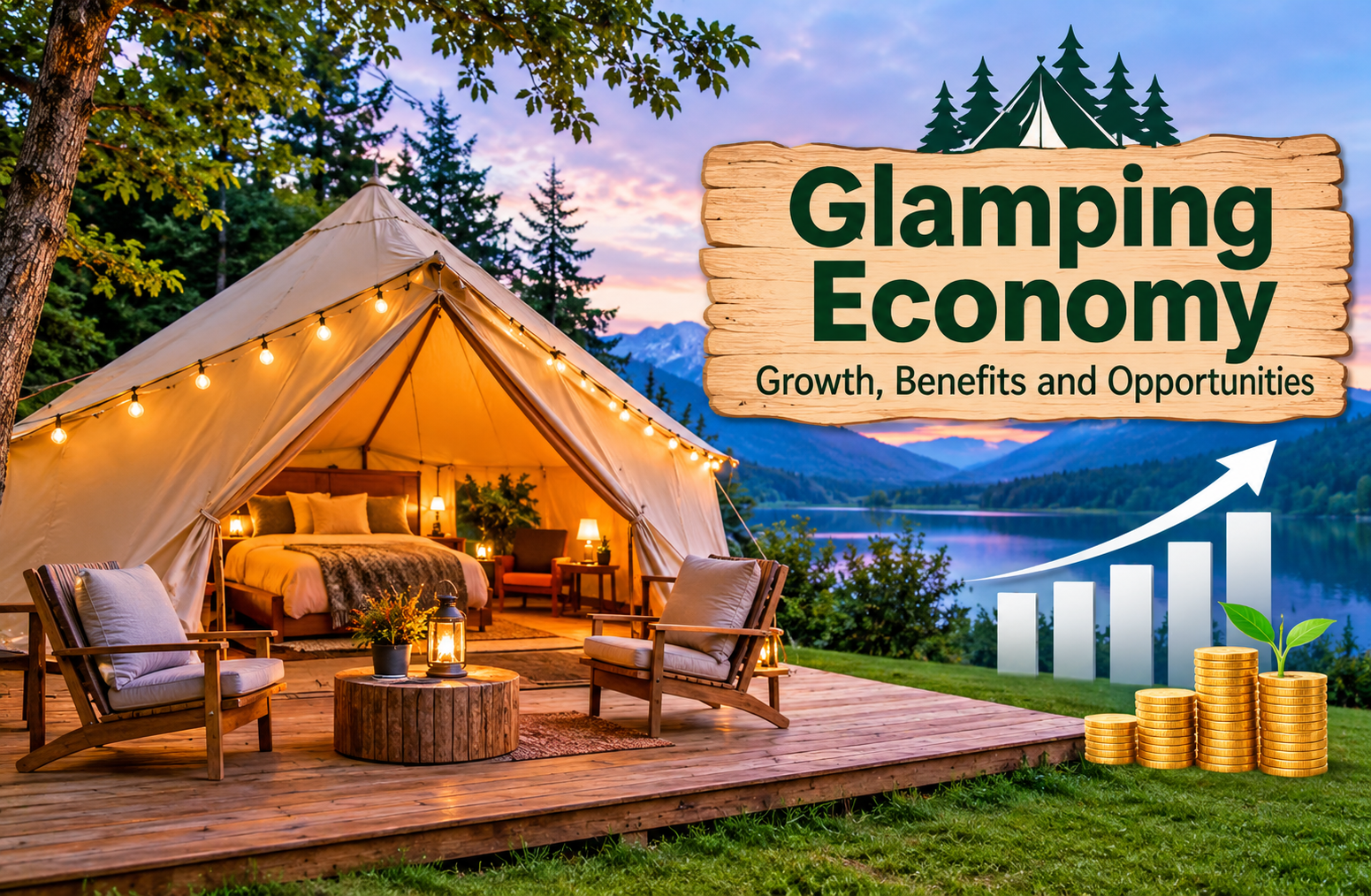
The glamping economy is transforming the outdoor hospitality industry by combining the natural appeal of traditional camping with the comfort, convenience, and premium services of modern accommodation. From luxury safari tents and treehouses to geodesic domes, yurts, and eco-friendly cabins, glamping has developed into an attractive travel option for people who want memorable outdoor experiences without giving up essential comforts. This growing industry is creating opportunities for accommodation providers, landowners, tourism businesses, local communities, and investors. As travelers increasingly prioritize unique experiences, wellness, privacy, and connections with nature, glamping is becoming an important part of the wider tourism and hospitality market.
Unlike traditional camping, which often requires visitors to bring their own equipment and manage basic facilities, glamping provides ready-to-use accommodation with features such as comfortable beds, private bathrooms, heating, electricity, stylish interiors, and sometimes premium dining services. This difference allows businesses to serve customers who enjoy nature but may not feel comfortable sleeping in ordinary tents or using basic camping facilities.
The economic importance of this business model goes beyond accommodation revenue. Glamping properties can generate income for local restaurants, tour operators, transportation providers, farmers, activity organizers, and independent suppliers. They can also help rural destinations attract visitors, create employment, and make productive use of suitable land.
However, the industry is not automatically profitable. Property development costs, seasonal demand, land-use regulations, maintenance, staffing, environmental responsibilities, and customer expectations all influence financial performance. Understanding these factors is essential for anyone researching the market, considering an investment, or planning to establish an outdoor hospitality business.
This article examines how the industry works, what drives its growth, where its economic opportunities exist, and which challenges businesses must address to build sustainable operations.
What Is the Glamping Economy?
The glamping economy refers to the commercial activities, employment, investment, consumer spending, and supporting services connected with glamorous camping and premium outdoor accommodation.
It includes much more than the money guests pay to stay in a luxury tent or cabin. The wider economic system involves property owners, accommodation operators, equipment manufacturers, construction companies, booking platforms, travel agencies, food suppliers, cleaning services, maintenance providers, and local tourism businesses.
At its foundation, this economic model combines three major industries:
- Tourism: Visitors travel to natural destinations for recreation, relaxation, adventure, and memorable experiences.
- Hospitality: Businesses provide accommodation, food, cleaning, customer service, and additional facilities.
- Outdoor recreation: Guests participate in activities such as hiking, kayaking, wildlife observation, cycling, fishing, and stargazing.
The combination creates a business model that can attract customers who might otherwise choose hotels, holiday rentals, traditional resorts, or conventional campsites.
For example, consider a rural property with scenic mountain views. Its owner could establish several furnished safari tents, provide private bathrooms, offer breakfast using locally sourced ingredients, and partner with nearby guides to arrange outdoor activities.
The accommodation generates direct revenue, while food purchases, guided experiences, transportation, and other services create additional economic activity.
This interconnected structure explains why the sector has implications for both private businesses and regional development.
How It Differs From Traditional Camping
Traditional camping generally focuses on affordable access to outdoor experiences. Visitors bring tents, sleeping bags, cooking equipment, and other supplies.
Glamping removes many of these practical barriers by providing furnished accommodation and convenient facilities.
| Traditional camping | Glamping |
| Guests often bring their own tents | Accommodation is usually provided |
| Basic sleeping arrangements | Furnished beds and comfortable interiors |
| Limited facilities at some sites | Enhanced facilities and services |
| Greater responsibility for setup | Ready-to-use accommodation |
| Often budget-oriented | Usually positioned at a higher price |
| Primarily outdoor-focused | Combines outdoor experiences with hospitality |
The distinction is important from an economic perspective.
Traditional campsites often compete heavily on location, accessibility, and affordability. Premium outdoor accommodation can also compete through design, privacy, service quality, unique experiences, and personalized hospitality.
That difference gives operators more ways to develop their products and pricing strategies.
The Main Components of the Industry
Several interconnected segments contribute to the wider market.
Accommodation providers: These businesses operate tents, cabins, domes, yurts, treehouses, converted vehicles, and other outdoor lodging structures.
Property developers: They identify suitable land, design accommodation layouts, install infrastructure, and develop hospitality facilities.
Equipment manufacturers: They supply weather-resistant tents, outdoor furniture, heating systems, bathroom equipment, lighting, insulation, and other specialized products.
Booking platforms: Online platforms connect accommodation providers with travelers and help businesses manage reservations, payments, and customer communication.
Experience providers: Local businesses offer activities such as guided hikes, horseback riding, fishing, photography tours, and wellness sessions.
Food and beverage businesses: Restaurants, farms, catering providers, and local producers supply meals and refreshments.
Professional services: Architects, accountants, insurance providers, consultants, maintenance contractors, and hospitality managers support business operations.
The strength of these connections makes the sector relevant to a wide range of commercial activities rather than a single accommodation category.
Current Market Size and Economic Growth
The expansion of premium outdoor accommodation is closely connected to changes in consumer travel preferences. Travelers increasingly look for experiences that feel different from conventional hotel stays. Natural surroundings, attractive accommodation, privacy, and access to outdoor activities have become important considerations when choosing a holiday.
However, understanding the market requires separating the value of the wider camping industry from the value of glamping alone.
There is no single universally accepted government measurement of the global glamping economy. Different research companies use different definitions, geographical boundaries, and accommodation categories. Some include luxury camping tents and yurts, while others also include cabins, treehouses, and specialized outdoor resorts.
For this reason, individual market-size estimates should be treated as estimates rather than official economic totals.
What Recent Industry Data Reveals
Research published by Kampgrounds of America (KOA) provides useful evidence of the growing commercial importance of outdoor hospitality.
Its 2026 Camping and Outdoor Hospitality Report identifies several important developments:
- More than 52 million North American households participated in camping during 2025.
- Camping generated an estimated $66 billion economic footprint.
- Glamping represented approximately 29% of all camping experiences in 2025.
- More than 15 million households went glamping during 2025.
- Approximately 54% of campers planned to experience glamping in 2026.
These figures demonstrate that premium outdoor accommodation has become an established part of the camping market rather than a small experimental category.
The full research is available through the KOA Camping and Outdoor Hospitality Report.
One particularly important finding is that glamping is attracting people who might not otherwise participate in traditional camping. This expands the potential customer base for outdoor hospitality businesses.
It also creates opportunities for established campgrounds to introduce premium accommodation without completely changing their existing business models.
Why Market Growth Matters to Investors
Market growth attracts investors because it can indicate increasing customer demand and opportunities for new business models.
However, rising consumer interest does not automatically translate into attractive investment returns.
Investors must evaluate:
- The number of potential customers in the destination.
- Average accommodation prices.
- Expected annual occupancy.
- Initial construction and development costs.
- Land acquisition or leasing expenses.
- Seasonal operating conditions.
- Local competition.
- Maintenance and replacement costs.
- Marketing and booking commissions.
A destination with strong tourism demand might still be unsuitable for a new property if land prices are too high or the market already contains too many similar accommodation providers.
The most valuable investment opportunities often exist where customer demand, location quality, operating costs, and limited competition work together.
What Is Driving the Growth of the Glamping Economy?
Several consumer, technological, and commercial developments are supporting the industry’s expansion.
Understanding these drivers helps explain why the sector continues to attract entrepreneurs and hospitality investors.
1. Changing Travel Preferences
Modern travelers are increasingly interested in experiences rather than accommodation alone.
A conventional hotel provides a place to sleep, relax, and access hospitality services. A well-designed glamping property can offer an entire experience built around its surroundings.
Guests may enjoy:
- Sleeping beneath the stars.
- Waking up to mountain or forest views.
- Having breakfast outdoors.
- Exploring nearby natural attractions.
- Enjoying private outdoor spaces.
- Experiencing local food and cultural activities.
These experiences can make a property memorable and encourage repeat visits.
For operators, this creates an opportunity to compete through differentiation instead of relying exclusively on low prices.
2. Demand for Comfort in Natural Settings
Traditional outdoor recreation can involve practical difficulties.
Some travelers dislike uncomfortable sleeping arrangements, unpredictable weather, shared bathrooms, complicated equipment, and limited access to electricity.
Premium camping accommodations reduce many of these concerns.
A furnished tent with a proper mattress, heating, lighting, and a private bathroom makes nature-based travel accessible to a wider audience.
This is particularly relevant for couples, families, older travelers, and people experiencing outdoor accommodation for the first time.
The commercial opportunity comes from removing barriers that previously prevented certain customers from booking outdoor holidays.
3. Social Media and Digital Discovery
Social media has changed how people discover travel destinations.
Unique accommodation photographs and videos can attract attention much faster than ordinary descriptions of hotel rooms.
Properties featuring panoramic windows, unusual architecture, scenic terraces, outdoor bathtubs, and attractive interiors can perform well in visual search and social media environments.
However, online popularity should not be confused with long-term profitability.
A property may receive substantial attention but still struggle with low occupancy, poor reviews, or high operating costs.
Successful operators use digital platforms to communicate genuine customer value rather than relying entirely on attractive photographs.
4. Interest in Wellness and Relaxation
Wellness tourism creates another opportunity for outdoor hospitality businesses.
Many travelers want holidays that help them disconnect from everyday responsibilities and spend more time in peaceful surroundings.
A glamping property can support this demand through:
- Quiet accommodation.
- Nature walks.
- Yoga sessions.
- Meditation areas.
- Outdoor relaxation spaces.
- Spa facilities.
- Healthy dining options.
Not every property needs expensive wellness infrastructure.
Sometimes, a peaceful setting, clean accommodation, thoughtful service, and attractive outdoor spaces provide sufficient value.
The important factor is matching facilities to the needs of the intended customer.
5. Growth of Experience-Based Travel
Travelers increasingly look for activities that make their holidays distinctive.
Accommodation businesses can increase their revenue opportunities by partnering with local experience providers.
For example, a property near a lake could offer fishing excursions, kayaking, and guided nature tours.
A mountain destination could arrange hiking trips, cycling experiences, photography sessions, and local food tastings.
These partnerships benefit both the accommodation provider and the surrounding community.
They also allow operators to create packages that increase the total value of each reservation.
6. Improvements in Booking Technology
Digital technology has reduced some of the operational difficulties associated with running small accommodation businesses.
Modern property-management systems can help operators manage:
- Reservations.
- Availability calendars.
- Customer information.
- Payments.
- Pricing.
- Housekeeping schedules.
- Guest communication.
- Booking confirmations.
Revenue-management software can also help businesses adjust prices according to demand, booking patterns, and seasonal conditions.
For smaller properties, these systems can reduce administrative work and improve the customer experience.
Technology is particularly valuable when an operator manages several accommodation types across one location.
Major Business Models Within the Industry
There is no single structure that defines a successful glamping business.
Different operators use different accommodation types, investment levels, customer segments, and service models.
The right approach depends on the location, available land, capital, and operating experience.
Luxury Safari Tent Resorts
Serengeti Migration Camp – Tanzânia | Rhino Africa
Pacote de Viagem para Botswana | Safári com Estilo
Premium Southern Africa Tour by Intrepid Travel | Bookmundi
12
Safari tents are among the recognizable forms of premium outdoor accommodation.
They usually feature durable canvas or specialized fabric structures, wooden platforms, furnished interiors, and outdoor seating areas.
Some properties provide private bathrooms, kitchenettes, heating, and climate-control systems.
Business advantages:
- Distinctive accommodation design.
- Potential for premium pricing.
- Flexible interior layouts.
- Strong appeal to couples and families.
- Opportunities for themed packages.
Business challenges:
- Weather exposure.
- Fabric maintenance.
- Insulation requirements.
- Replacement of damaged materials.
- Heating and cooling expenses.
Safari tents can work particularly well in scenic rural destinations where permanent construction may be difficult or expensive, provided local regulations permit their installation.
Geodesic Dome Accommodation
Glamping w Polsce – gdzie znaleźć luksus blisko natury? Sprawdzone miejscówki
Luxe Den Resorts | Geodesic Dome Glamping near Twin Falls, Idaho
10
Geodesic domes have become recognizable because of their unusual shape and panoramic design possibilities.
Some feature transparent sections that allow guests to enjoy surrounding views and nighttime skies.
They can be marketed as romantic retreats, nature-focused accommodation, or premium short-stay experiences.
Their commercial appeal often depends on location and design quality.
Operators should carefully consider ventilation, condensation, temperature control, privacy, and the durability of transparent materials.
A visually impressive dome is not necessarily comfortable throughout the year.
Treehouse Accommodation
The Green O: A Luxury Retreat in Montana’s Natural Beauty
TreeDwellers – Luxury treehouses in the Cotswolds – Coolstays
15
Treehouses provide a distinctive experience that can justify higher accommodation prices in suitable destinations.
They are especially attractive to couples, families, and travelers looking for unusual places to stay.
However, treehouse construction requires careful structural planning.
Important considerations include:
- Tree health and suitability.
- Structural engineering.
- Safe access and stairs.
- Fire protection.
- Water and electrical connections.
- Maintenance access.
- Environmental impact.
The design must balance the guest experience with long-term structural safety.
Yurts and Circular Tented Structures
Een yurt waar je als vanzelf helemaal zen wordt – OrigineelOvernachten
Dacza Puchacza Glamping | Stare Osieczno
OT 3515H Texas Yurt Haus Horned Frog | RedAwning
13
Yurts provide flexible accommodation that can be adapted for different customer segments.
Their circular interiors offer opportunities for creative furniture layouts, comfortable sleeping arrangements, and attractive decoration.
Some operators use them as affordable entry-level premium accommodation, while others develop high-end versions with private bathrooms and outdoor facilities.
The business advantage is the ability to create a distinctive experience without necessarily requiring the same architectural complexity as permanent buildings.
Eco-Cabins and Tiny Houses
12
Eco-cabins and tiny houses occupy an important position between traditional holiday rentals and outdoor resorts.
They can provide stronger insulation, permanent plumbing, and more reliable facilities than many temporary structures.
They are particularly suitable for properties targeting year-round visitors.
Their initial construction costs may be higher, but they can also offer longer operating seasons and more consistent comfort.
How Glamping Businesses Generate Revenue
Understanding revenue generation is essential when evaluating the commercial potential of an outdoor hospitality property.
A business that depends entirely on overnight accommodation may miss several opportunities to increase customer spending.
Successful operators often develop multiple revenue streams that complement their main service.
1. Accommodation Reservations
Room or unit reservations are generally the primary source of income.
The nightly rate depends on factors such as:
- Location.
- Accommodation quality.
- Season.
- Local competition.
- Guest capacity.
- Privacy.
- Available facilities.
- Brand reputation.
A property near a popular natural attraction may command higher prices than an accommodation business in an isolated location with limited visitor demand.
However, higher prices only create value when customers believe the experience justifies the expense.
2. Food and Beverage Services
Food services can generate additional revenue while making the guest experience more convenient.
Possible offerings include:
- Breakfast packages.
- Outdoor dining.
- Barbecue arrangements.
- Picnic baskets.
- Local specialty meals.
- Coffee and refreshments.
Operators should calculate food costs, staff requirements, storage needs, and food-safety obligations before introducing these services.
Partnering with nearby restaurants or catering businesses can be a practical alternative to operating a full kitchen.
3. Outdoor Activities
Experiences can increase spending per guest and encourage longer stays.
Examples include:
- Guided hiking.
- Horse riding.
- Fishing.
- Kayaking.
- Cycling.
- Birdwatching.
- Photography tours.
- Stargazing sessions.
Businesses do not necessarily need to own all the equipment or employ every guide.
Partnerships with experienced local providers can create additional income while keeping fixed costs manageable.
4. Special Packages and Events
Some customers visit outdoor properties for specific occasions.
Operators can develop packages for:
- Anniversaries.
- Birthdays.
- Romantic weekends.
- Family holidays.
- Small corporate retreats.
- Private celebrations.
- Wellness weekends.
These packages may combine accommodation, meals, decorations, activities, and additional services.
However, event hosting requires careful planning around noise, parking, safety, insurance, and the expectations of other guests.
5. Equipment Rentals and Additional Services
Businesses can also generate revenue through practical services.
These may include bicycle rentals, outdoor equipment, guided excursions, firewood, transportation, and locally produced goods.
The key is to offer products that customers genuinely need.
Adding unnecessary services can increase operating complexity without producing meaningful financial returns.
Economic Benefits for Local Communities
One of the most important features of outdoor hospitality is its potential to distribute visitor spending beyond the accommodation property.
Traditional tourism businesses can concentrate spending within large hotels, resorts, and established commercial areas.
Smaller outdoor accommodation businesses may create additional opportunities for local suppliers and independent service providers.
Employment Opportunities
Glamping properties require workers across several operational areas.
These include:
- Property management.
- Reception and guest services.
- Housekeeping.
- Maintenance.
- Landscaping.
- Food preparation.
- Security.
- Marketing.
- Activity coordination.
Small businesses may employ only a limited number of full-time workers, but they can also create seasonal and part-time opportunities.
Local hiring can be especially valuable in rural destinations where employment options are limited.
Support for Local Suppliers
A property that purchases food, furniture, building materials, cleaning products, and maintenance services locally can help circulate tourism income within its surrounding community.
For example, a property might purchase breakfast ingredients from nearby farms and contract local tradespeople for repairs.
This creates commercial relationships that can benefit businesses beyond the tourism sector.
Opportunities for Rural Development
Some rural destinations have attractive landscapes but limited accommodation infrastructure.
A carefully planned outdoor hospitality project can encourage visitors to stay longer and explore surrounding attractions.
Longer stays may increase spending on restaurants, transportation, retail products, and recreational activities.
The benefits are not guaranteed. They depend on visitor numbers, local business participation, accessibility, and responsible management.
Greater Visibility for Lesser-Known Destinations
Unique accommodation can help smaller destinations attract attention.
A well-managed property may become a reason for travelers to visit an area that was previously overlooked.
This can support local tourism networks and encourage additional investment.
However, development should be coordinated with local residents and authorities to prevent problems involving traffic, waste, water use, and environmental pressure.
The Investment Economics of a Glamping Business
A major reason entrepreneurs explore this sector is the possibility of developing a differentiated hospitality business without necessarily constructing a conventional hotel.
However, the actual financial requirements vary significantly.
A small property with a few tents may have a very different investment profile from a fully serviced outdoor resort.
Initial Development Costs
Before accepting reservations, operators must consider the cost of preparing the property.
Typical expenses include:
| Investment category | What it covers |
| Land | Purchase, lease, or site access |
| Site preparation | Clearing, drainage, access roads |
| Accommodation | Tents, domes, cabins, or yurts |
| Foundations and platforms | Decks, bases, structural work |
| Utilities | Electricity, water, internet |
| Sanitation | Bathrooms, septic systems, waste treatment |
| Furniture | Beds, seating, storage, decoration |
| Safety | Fire protection, emergency equipment |
| Landscaping | Paths, lighting, outdoor areas |
| Technology | Booking and property-management systems |
| Marketing | Branding, photography, website development |
Some of these expenses are easy to underestimate.
For example, a property may appear inexpensive because its land is affordable. However, installing reliable water, electricity, wastewater treatment, and vehicle access could significantly increase the total development budget.
Operating Expenses
After opening, businesses must manage recurring expenses.
Common operating costs include:
- Employee salaries.
- Cleaning and laundry.
- Utilities.
- Repairs.
- Insurance.
- Property taxes and applicable local charges.
- Booking platform commissions.
- Marketing.
- Supplies.
- Landscaping.
- Waste management.
Seasonal businesses must also prepare for periods when revenue is limited but certain expenses continue.
Understanding Occupancy Rate
Occupancy measures how much of the available accommodation capacity is being used.
The basic formula is:
OccupancyRate=OccupiedUnitNightsAvailableUnitNights100
For example, imagine a property with five accommodation units operating for 30 days.
Its monthly capacity is:
530=150unitnights
If guests occupy 90 unit nights:
\[ \frac{90}{150}\times100=60\% \]
The property has achieved 60% occupancy.
This metric helps operators understand whether their accommodation is attracting sufficient demand.
However, occupancy alone does not determine profitability. A property with high occupancy but excessive operating costs may perform worse than a smaller business with fewer guests and stronger margins.
Understanding Average Daily Rate
Average Daily Rate, commonly called ADR, measures the average accommodation revenue earned per occupied unit night.
The formula is:
ADR=AccommodationRevenueOccupiedUnitNights
Suppose a property generates $9,000 in accommodation revenue from 90 occupied unit nights.
Its ADR is:
\[ \frac{\$9,000}{90}=\$100 \]
This means the average occupied unit night generated $100 in accommodation revenue.
ADR helps operators understand whether pricing changes are improving performance.
Understanding Revenue Per Available Unit
Revenue Per Available Room, or RevPAR, is widely used in hospitality. For glamping properties, the same principle can be applied to available accommodation units.
RevPAR=ADROccupancy
Using an ADR of $100 and occupancy of 60%:
\[ RevPAR = \$100 \times 0.60 = \$60 \]
The result is $60 per available unit night.
This metric is useful because it combines pricing and occupancy.
It also helps operators compare different periods without looking at either figure in isolation.
An Illustrative Business Revenue Example
Consider a hypothetical property with eight accommodation units.
Assume the following operating conditions:
| Metric | Assumption |
| Accommodation units | 8 |
| Operating days | 30 |
| Average nightly price | $120 |
| Monthly occupancy | 50% |
| Available unit nights | 240 |
| Occupied unit nights | 120 |
Monthly accommodation revenue would be:
\[ 120 \times \$120 = \$14,400 \]
Now assume the business generates an additional $2,400 from food, activities, and other services.
Total monthly revenue becomes:
\[ \$14,400+\$2,400=\$16,800 \]
This is gross revenue, not profit.
The business must still pay its employees, utilities, maintenance expenses, taxes, marketing costs, insurance, financing expenses, and other operating costs.
This example illustrates why financial projections should always distinguish between revenue, operating profit, and cash flow.
Why Break-Even Analysis Matters
Break-even analysis identifies the sales level required to cover costs.
A simplified formula is:
Break-EvenSales=FixedCostsContributionMarginRatio
Fixed costs include expenses that do not change directly with each additional guest, such as certain salaries, insurance, and property payments.
Variable costs include expenses that increase with occupancy, such as laundry, guest supplies, and some utility costs.
For a seasonal business, it is particularly important to calculate break-even requirements for different months rather than relying only on annual averages.
A business may be profitable during peak summer periods but lose money during winter.
The Importance of Cash Flow
Cash flow determines whether a business can meet its financial obligations when payments become due.
A property may show accounting profit but still face cash shortages if:
- Construction payments are due before opening.
- Guest payments arrive after supplier invoices.
- Repairs occur unexpectedly.
- Off-season revenue falls.
- Loan repayments remain high.
- Major equipment requires replacement.
Operators should maintain sufficient working capital to manage these situations.
A realistic investment plan includes both the initial development budget and a financial reserve for the early operating period.
Key Customer Segments and Their Spending Behavior
Understanding the target audience is one of the most important decisions in developing an outdoor hospitality business.
Different travelers have different expectations, budgets, and reasons for booking.
Couples and Romantic Travelers
Couples often look for privacy, attractive surroundings, and accommodation suitable for short breaks.
They may value:
- Private outdoor spaces.
- Scenic views.
- Comfortable beds.
- Outdoor dining.
- Special occasion packages.
- Hot tubs where suitable and legally permitted.
A property targeting this segment should focus on privacy, comfort, and service quality.
Families With Children
Families may prioritize safety, convenience, and activities suitable for different age groups.
Important features can include:
- Family-sized accommodation.
- Safe walking areas.
- Clean bathrooms.
- Accessible food options.
- Child-friendly outdoor activities.
- Secure recreational spaces.
Family-oriented properties should also communicate accommodation capacity clearly to avoid confusion during booking.
Younger Experience-Focused Travelers
Younger travelers may discover destinations through social media, travel communities, and online reviews.
They can be attracted by distinctive architecture, affordable packages, outdoor activities, and shared experiences.
However, younger customers may also be more sensitive to pricing.
Operators should avoid assuming that every traveler interested in unique accommodation is willing to pay premium rates.
Older and Comfort-Oriented Travelers
Older guests may value comfortable beds, convenient bathrooms, easy access, and reliable heating or cooling.
Accessibility should be considered during property planning.
This includes pathways, entrance design, bathroom layouts, lighting, and emergency arrangements.
Remote Workers and Longer-Stay Visitors
Some travelers combine work with leisure.
These customers may need:
- Reliable internet.
- Comfortable seating.
- Quiet accommodation.
- Adequate lighting.
- Electrical outlets.
- Longer-stay pricing.
A property that provides these features may attract guests outside traditional weekend travel periods.
Geographic Opportunities in the Glamping Economy
Location is one of the strongest factors influencing the success of an outdoor hospitality business.
A beautiful property is not necessarily a commercially suitable property.
Operators must consider access, climate, attractions, infrastructure, and the characteristics of nearby tourism markets.
North America
North America has a developed camping and outdoor recreation market.
National and state parks, lakes, forests, mountains, and rural tourism destinations create opportunities for premium outdoor accommodation.
The United States and Canada also have established campground operators, outdoor equipment suppliers, and booking services.
Competition can be significant in popular destinations, making differentiation and customer reviews particularly important.
Europe
Europe offers diverse opportunities because of its varied landscapes and established tourism infrastructure.
Countries with mountain regions, coastlines, forests, and rural destinations can support different accommodation styles.
Glamping can complement existing tourism products by offering visitors a distinctive alternative to hotels and conventional holiday rentals.
Operators must pay particular attention to planning permission, environmental restrictions, land-use rules, and seasonal conditions.
Asia-Pacific
The Asia-Pacific region includes a wide range of potential destinations.
Mountain retreats, coastal landscapes, forest properties, and rural tourism areas provide different opportunities.
Travelers seeking unique accommodation may be attracted by properties that combine local architecture, cultural experiences, and natural surroundings.
However, market demand and operating conditions vary considerably between countries.
Emerging Tourism Destinations
Less-established tourism destinations may offer opportunities where land costs are relatively accessible and natural attractions are underdeveloped commercially.
Nevertheless, low land prices should never be the only reason for choosing a location.
A business still needs:
- Reliable transportation access.
- Suitable infrastructure.
- Sufficient visitor demand.
- Appropriate legal permissions.
- Access to workers and suppliers.
- Effective emergency services.
Without these conditions, development can become expensive and difficult to operate.
Opportunities for Entrepreneurs and Small Businesses
The industry offers several entry points for entrepreneurs.
Not every opportunity requires building a large luxury resort.
Smaller businesses can participate through specialized products and services.
Starting With a Small Property
A small-scale operator may begin with a limited number of accommodation units.
This approach can help test customer demand before investing in a larger development.
The business should focus on a clearly defined customer segment and a consistent guest experience.
A small property can compete through location, cleanliness, service, and unique accommodation rather than extensive facilities.
Supplying Glamping Equipment
The development of outdoor accommodation creates demand for specialized products.
Potential business categories include:
- Weather-resistant tents.
- Insulated structures.
- Outdoor furniture.
- Portable bathroom systems.
- Solar lighting.
- Heating equipment.
- Water storage solutions.
- Outdoor kitchens.
- Sustainable construction materials.
Suppliers can serve both new businesses and established operators replacing or upgrading their equipment.
Property Management Services
Some landowners want to enter hospitality but lack the time or expertise to manage reservations and guest services.
Professional property-management companies can provide:
- Reservation management.
- Customer communication.
- Housekeeping coordination.
- Maintenance supervision.
- Pricing management.
- Marketing.
- Performance reporting.
This model allows service providers to earn income without purchasing or owning accommodation properties.
Marketing and Booking Services
Smaller operators may struggle with professional marketing.
Specialized agencies can help through website development, search optimization, content production, photography, paid advertising, and reputation management.
There is also demand for booking technology that simplifies operations for independent outdoor accommodation businesses.
Local Tourism Partnerships
Entrepreneurs can establish businesses that connect accommodation providers with local experiences.
Examples include guided nature tours, transportation services, food experiences, outdoor equipment rentals, and wellness activities.
Such businesses can benefit from growing visitor numbers without directly operating accommodation.
Major Challenges Affecting Industry Growth
Despite its commercial potential, this sector faces several important risks.
Understanding these challenges before investing can prevent expensive mistakes.
1. High Initial Investment
Although some accommodation structures are less expensive than conventional buildings, a complete property can still require substantial capital.
The total cost includes infrastructure, utilities, sanitation, furniture, landscaping, safety equipment, and regulatory compliance.
A common mistake is budgeting only for the accommodation units while ignoring the supporting facilities.
The solution is to prepare a detailed development budget before purchasing land or placing equipment orders.
2. Seasonal Demand
Weather conditions and school holidays can strongly influence reservations.
Some destinations experience high occupancy during summer but much weaker demand during colder months.
Seasonality can create problems with employee retention, cash flow, and equipment maintenance.
Operators can reduce exposure by developing off-season packages, targeting different customer groups, and choosing accommodation suitable for more than one season.
However, extending the operating period should only be done when additional revenue justifies the associated costs.
3. Weather and Environmental Risks
Outdoor accommodation is exposed to conditions that traditional buildings may handle more easily.
Heavy rainfall, strong winds, extreme temperatures, flooding, and storms can affect guest safety and property performance.
Businesses should conduct appropriate site assessments and select structures designed for local conditions.
Emergency procedures, evacuation arrangements, drainage systems, and regular inspections are essential.
4. Land-Use and Regulatory Restrictions
Not every piece of attractive land can legally operate as a hospitality property.
Local authorities may regulate:
- Planning permission.
- Temporary structures.
- Permanent construction.
- Wastewater disposal.
- Water extraction.
- Fire safety.
- Food preparation.
- Business licensing.
- Environmental protection.
Requirements differ between jurisdictions.
Investors should obtain advice from relevant local planning and legal professionals before making significant commitments.
5. Infrastructure Limitations
Remote destinations can have limited access to electricity, drinking water, internet, roads, and emergency services.
These limitations can increase development and operating costs.
Alternative energy systems and water-management solutions may help, but they require careful design and maintenance.
The actual cost of operating an off-grid property should be included in financial forecasts.
6. Maintaining Service Quality
Premium accommodation creates high customer expectations.
Guests paying more than they would for basic camping may expect clean bathrooms, comfortable beds, reliable facilities, responsive staff, and accurate descriptions.
One poor experience can damage a property’s online reputation.
Consistent housekeeping procedures, maintenance inspections, staff training, and clear communication are therefore essential.
7. Increasing Competition
As the market attracts more operators, businesses may face pressure from competing properties.
Simply offering a tent or cabin is no longer enough to create a distinctive brand.
Operators need a clear reason for customers to choose their property.
This could be a unique location, specialized accommodation, excellent service, locally inspired experiences, or a well-defined customer segment.
8. Environmental Pressure
Poorly managed tourism can damage the natural environment that attracts visitors.
Potential problems include:
- Excessive water consumption.
- Waste accumulation.
- Soil erosion.
- Habitat disturbance.
- Noise pollution.
- Increased vehicle traffic.
- Improper wastewater disposal.
Environmental management is not simply a marketing benefit. It is essential to maintaining the long-term value of a tourism destination.
Sustainability and Its Economic Importance
Sustainability is becoming an important consideration in outdoor hospitality.
Guests may prefer businesses that demonstrate responsible resource management, but environmental initiatives must also make operational sense.
A property that reduces water waste or improves energy efficiency may lower expenses over time.
Renewable Energy
Solar energy can support lighting, water heating, and selected electrical systems.
However, operators must consider battery storage, energy demand, maintenance, and backup power requirements.
Renewable energy should be selected according to actual consumption patterns rather than marketing appeal.
Responsible Water Management
Water management is particularly important in remote and environmentally sensitive locations.
Useful measures include:
- Low-flow shower systems.
- Water-efficient fixtures.
- Leak detection.
- Rainwater collection where legally permitted.
- Proper wastewater treatment.
- Regular plumbing inspections.
Water-saving systems should never compromise hygiene or drinking-water safety.
Waste Reduction
Businesses can reduce waste through responsible purchasing, recycling, composting where appropriate, and avoiding unnecessary single-use products.
Working with local suppliers may also reduce some transportation requirements.
Protecting Natural Habitats
Property layouts should minimize disturbance to surrounding ecosystems.
Operators should consider building locations, walking routes, lighting, vegetation, and visitor activities.
Protecting the landscape supports both environmental quality and the property’s long-term attractiveness.
Measuring Sustainability Performance
Businesses should track measurable indicators rather than making broad environmental claims.
Useful measurements include:
- Water consumption per guest night.
- Energy consumption per occupied unit.
- Waste generated per guest.
- Percentage of locally sourced supplies.
- Maintenance and replacement rates.
- Environmental incidents.
Accurate measurement helps operators identify areas for improvement and communicate their efforts honestly.
How to Start a Profitable Glamping Business
Launching a successful operation requires more than purchasing attractive accommodation structures.
A practical business development process should address market demand, legal requirements, investment costs, and customer experience.
Step 1: Research the Local Market
Start by identifying existing accommodation providers in the proposed destination.
Study their prices, facilities, customer reviews, occupancy patterns where available, and target audiences.
Look for unanswered customer needs.
For example, a destination may have numerous traditional hotels but very few family-friendly outdoor properties.
That could represent an opportunity, provided sufficient demand exists.
Step 2: Choose the Right Location
Evaluate potential sites based on:
- Natural attractiveness.
- Road access.
- Nearby tourism attractions.
- Availability of utilities.
- Weather conditions.
- Safety.
- Legal development restrictions.
- Distance from population centers.
A location should be assessed commercially as well as visually.
Step 3: Define the Customer Segment
Decide whether the property will target couples, families, adventure travelers, wellness visitors, or longer-stay guests.
This decision influences accommodation design, pricing, services, and marketing.
Trying to attract everyone can make the business difficult to position.
Step 4: Develop a Realistic Financial Plan
Estimate all development costs and prepare operating forecasts.
Include conservative assumptions for occupancy and pricing.
Create separate financial scenarios:
- A cautious scenario with weaker demand.
- A realistic scenario based on market evidence.
- An optimistic scenario with stronger bookings.
This helps investors understand how the business might perform under different conditions.
Step 5: Confirm Legal and Safety Requirements
Before development, verify the applicable permissions and regulations.
Consult local authorities and qualified professionals about construction, accommodation licensing, sanitation, fire protection, insurance, and environmental requirements.
Legal compliance should be addressed before the project becomes difficult to change.
Step 6: Select Appropriate Accommodation
Choose structures that match the climate, customer segment, and available budget.
A property in a hot region may require different materials and ventilation systems from one in a cold mountain destination.
Prioritize durability, comfort, safety, and maintenance requirements.
Step 7: Build the Guest Experience
Think about the complete customer journey.
Consider what happens when guests discover the property, make a reservation, arrive, check in, use the facilities, request assistance, and leave.
Clear instructions, accurate photographs, clean accommodation, and responsive communication can improve customer satisfaction.
Step 8: Establish an Online Presence
A professional website should explain:
- Accommodation types.
- Prices.
- Available facilities.
- Location.
- Booking conditions.
- Cancellation policies.
- Safety information.
- Nearby activities.
Use accurate descriptions and genuine photographs.
Search optimization can help potential customers discover the property when researching accommodation in the destination.
Step 9: Develop Local Partnerships
Build relationships with nearby restaurants, activity providers, transport businesses, and suppliers.
Partnerships can improve the guest experience while creating additional revenue opportunities.
They can also help a new property become part of the wider local tourism network.
Step 10: Monitor Performance and Improve
After opening, track important business metrics.
These should include occupancy, ADR, RevPAR, booking sources, customer acquisition costs, average stay duration, guest satisfaction, and operating expenses.
Review customer feedback regularly.
Use this information to improve pricing, services, maintenance, and marketing.
The Role of Technology in Modern Outdoor Hospitality
Technology is changing how smaller accommodation businesses compete.
In the past, independent properties often depended on telephone reservations and manual booking records.
Today, digital systems allow operators to manage many activities through integrated platforms.
Online Reservation Systems
Booking systems help customers check availability, compare accommodation options, and complete reservations.
They also reduce the risk of double bookings and manual scheduling errors.
Dynamic Pricing
Dynamic pricing adjusts accommodation rates according to demand and availability.
For example, a property may charge different prices for weekends, holidays, and quieter weekdays.
Pricing decisions should reflect genuine demand and customer value rather than making frequent changes without a clear strategy.
Customer Relationship Management
Customer relationship management systems help operators organize guest information and communication.
They can support reservation confirmations, arrival instructions, follow-up messages, and feedback requests.
Businesses must also handle personal information responsibly and follow applicable privacy regulations.
Digital Reputation Management
Online reviews influence customer decisions.
Operators should monitor feedback across relevant booking and travel platforms.
When complaints appear, businesses should respond professionally and address the underlying issue.
A thoughtful response cannot guarantee a better rating, but it demonstrates accountability and can help identify operational weaknesses.
Future Trends and the Outlook for the Industry
The future of outdoor hospitality will depend on how businesses respond to changing customer expectations, operating costs, environmental conditions, and competition.
Several developments are likely to influence the sector.
Greater Demand for Distinctive Accommodation
Customers may continue looking for properties that offer experiences unavailable through conventional hotels.
This creates opportunities for thoughtfully designed cabins, domes, safari tents, and other specialized accommodation.
However, originality should be supported by practical comfort and reliable facilities.
Hybrid Accommodation Concepts
Some businesses may combine traditional camping, premium tents, cabins, and recreational vehicle facilities within one property.
This can help attract customers with different budgets and travel preferences.
A mixed accommodation strategy may also reduce dependence on one customer segment.
Increased Focus on Affordable Luxury
Premium outdoor accommodation does not always need to include expensive facilities.
Many travelers value privacy, cleanliness, attractive surroundings, and thoughtful service more than unnecessary luxury features.
Operators who understand this distinction may be able to create appealing experiences while controlling development costs.
Wellness-Focused Experiences
Outdoor relaxation, nature-based activities, and wellness packages may continue attracting travelers seeking a break from busy lifestyles.
Businesses can explore this segment without automatically investing in expensive spa infrastructure.
More Attention to Environmental Performance
Water efficiency, energy management, responsible waste disposal, and habitat protection are likely to become increasingly important.
Properties that treat environmental management as part of everyday operations may be better positioned to manage long-term costs and community expectations.
Professionalization of Small Operators
As competition increases, small accommodation businesses may adopt more advanced booking, pricing, accounting, and customer-management systems.
Professional operations can help independent properties compete more effectively with larger hospitality brands.
Expansion of Experience-Based Partnerships
Accommodation providers may increasingly work with local guides, restaurants, farms, and activity businesses.
This creates a broader tourism product and gives visitors more reasons to extend their stays.
It also allows local businesses to participate in tourism growth without owning accommodation infrastructure.
Frequently Asked Questions About the Glamping Economy
1. What does the glamping economy mean?
The glamping economy refers to the businesses, investments, jobs, services, and consumer spending connected with luxury outdoor accommodation. It includes accommodation providers, equipment suppliers, booking platforms, tourism operators, restaurants, and local service businesses.
2. Is the glamping industry growing?
Yes. Industry research indicates increasing participation in premium outdoor accommodation. KOA’s 2026 report estimates that more than 15 million North American households went glamping in 2025, while glamping accounted for approximately 29% of camping experiences.
3. How do glamping businesses make money?
Most businesses earn revenue through overnight accommodation reservations. Additional income can come from meals, guided activities, equipment rentals, transportation, special packages, and wellness services.
4. Is starting a glamping business profitable?
A glamping business can be profitable when customer demand, accommodation pricing, occupancy, development costs, and operating expenses are managed effectively. However, profitability is not guaranteed. Seasonality, competition, maintenance, and regulatory requirements can affect financial performance.
5. What are the biggest challenges facing glamping businesses?
The main challenges include high initial investment, seasonal demand, weather exposure, land-use regulations, infrastructure limitations, maintenance, competition, and environmental responsibilities. Careful planning can help reduce these risks.
6. What is the future of the glamping economy?
The outlook is supported by interest in nature-based travel, distinctive accommodation, wellness, and personalized experiences. Businesses that combine comfortable facilities, responsible environmental practices, effective technology, and strong customer service may be better positioned for long-term growth.
Conclusion
The glamping economy represents an important development in modern tourism and outdoor hospitality. By combining natural surroundings with comfortable accommodation and convenient services, it has created a business model that appeals to travelers seeking experiences beyond conventional hotels and traditional camping.
Its economic influence extends across accommodation, food services, equipment manufacturing, transportation, recreation, property development, and local tourism. This creates opportunities for established hospitality companies, independent entrepreneurs, landowners, and supporting businesses.
Industry research also demonstrates that glamping has become a meaningful part of North American camping activity. Growing consumer participation, interest in unique accommodation, and demand for experience-based travel provide a strong foundation for further development.
Nevertheless, long-term success depends on more than market popularity. Businesses must carefully evaluate their locations, development expenses, customer segments, occupancy rates, pricing strategies, environmental responsibilities, and operating costs.
The strongest business models will be those that balance attractive experiences with financial discipline and responsible tourism practices. Rather than focusing exclusively on luxury facilities, operators should prioritize customer satisfaction, operational efficiency, sustainable resource management, and meaningful connections with local communities.
As the hospitality industry continues to evolve, premium outdoor accommodation is likely to remain an important option for travelers and a potential source of economic activity for tourism destinations.